CRM SOFTWARE
6 best CRM for manufacturing teams in 2026

By Ganesh Ravi Shankar
Last updated on Aug 3, 2026
Written by a CRM Business Head with hands-on experience evaluating CRM tools for B2B manufacturers, tested against real quote cycles, distributor workflows, and multi-stakeholder deal structures, not feature checklists.
QUICK SUMMARY
Explore this blog to find out which CRM fits manufacturing sales teams best, covering ERP integration, long-cycle pipelines, AI features, and honest pricing across 6 platforms.
The Manufacturing CRM Guide: 7 Tools Compared

Built for sales teams that sell complex
Most CRMs are built for SaaS sales cycles. SparrowCRM is built for teams managing long deals, multiple stakeholders, and recurring accounts.
Most CRMs are built for short, linear sales cycles. Manufacturing doesn't work that way: your deals run for months, involve distributors and procurement teams simultaneously, and require accurate production data before a quote can even go out. A generic CRM tracks your contacts.
It won't tell you which of your 22 open quotes is going cold, which channel partner hasn't re-ordered in 90 days, or which plant manager just started evaluating a competitor. That's the gap manufacturing CRM software is built to close.
What is manufacturing CRM software?
Manufacturing CRM software is a customer relationship management system designed for industrial sales environments. It handles quote-to-order workflows, distributor and channel partner relationships, multi-stakeholder deal management, production-aligned forecasting, and after-sales service, all connected in one system.
Unlike a generic CRM, it ties sales activity to operational data, inventory, production schedules, and order history. Hence, your team works from accurate information at every stage of the deal, not estimates.
How we evaluated these tools
We assessed each platform against four criteria that matter specifically to manufacturing sales teams:
- ERP integration depth: native connectors vs. API workarounds vs. no integration
- Long-cycle pipeline support: stage automation, deal health signals, multi-contact tracking
- AI capabilities: whether AI actively helps prioritise deals or is decorative
- Team size fit: whether the tool works for a 10-to-100-person team without a dedicated CRM admin
We cross-referenced G2 ratings, verified user reviews, and direct input from manufacturing sales practitioners. Tools positioned as manufacturing-specific but built entirely for enterprise are noted.

What matters most in a manufacturing CRM?
Quick comparison: 7 best CRM for manufacturing
Use this table for a fast side-by-side view before reading the full breakdown. All tools listed are part of the broader industry-specific CRM landscape evaluated across sector fit, pipeline support, and integration depth.
Tool | Best For | ERP Integration | AI Features | Long Sales Cycle | Starting Price | G2 Rating |
|---|---|---|---|---|---|---|
Salesforce Manufacturing Cloud | Enterprise manufacturers | Native | Advanced (Agentforce) | Yes | Contact for pricing | 4.4/5 |
Microsoft Dynamics 365 | Microsoft-stack manufacturers | Native (ERP+CRM) | Copilot AI | Yes | Contact for pricing | 3.8/5 |
HubSpot CRM | Mid-market, marketing-heavy | Via integration | AI email & scoring | Partial | Free / $15+/user/mo | 4.4/5 |
SparrowCRM | SMB sales teams, AI-native | Via integration | Deal scoring, AI insights | Yes | Free/$19/user/mo | |
Zoho CRM | Budget-conscious SMBs | Zoho Inventory native | Zia AI assistant | Partial | $14/user/mo | 4.1/5 |
Pipedrive | Small teams, simple pipelines | Via Zapier/API | AI sales assistant | Partial | $14/user/mo | 4.3/5 |
Salesforce Manufacturing Cloud
Best For
Enterprise manufacturers
Erp Integration
Native
Ai Features
Advanced (Agentforce)
Long Sales Cycle
Yes
Starting Price
Contact for pricing
G2 Rating
4.4/5
Microsoft Dynamics 365
Best For
Microsoft-stack manufacturers
Erp Integration
Native (ERP+CRM)
Ai Features
Copilot AI
Long Sales Cycle
Yes
Starting Price
Contact for pricing
G2 Rating
3.8/5
HubSpot CRM
Best For
Mid-market, marketing-heavy
Erp Integration
Via integration
Ai Features
AI email & scoring
Long Sales Cycle
Partial
Starting Price
Free / $15+/user/mo
G2 Rating
4.4/5
SparrowCRM
Best For
SMB sales teams, AI-native
Erp Integration
Via integration
Ai Features
Deal scoring, AI insights
Long Sales Cycle
Yes
Starting Price
Free/$19/user/mo
Zoho CRM
Best For
Budget-conscious SMBs
Erp Integration
Zoho Inventory native
Ai Features
Zia AI assistant
Long Sales Cycle
Partial
Starting Price
$14/user/mo
G2 Rating
4.1/5
Pipedrive
Best For
Small teams, simple pipelines
Erp Integration
Via Zapier/API
Ai Features
AI sales assistant
Long Sales Cycle
Partial
Starting Price
$14/user/mo
G2 Rating
4.3/5
7 best CRM for manufacturing: full breakdown
1Salesforce Manufacturing Cloud

Source: salesforce.com
Best for: Large manufacturing enterprises with dedicated CRM and ops teams
Salesforce Manufacturing Cloud is the most feature-complete option for enterprise manufacturers. It extends Sales Cloud with native modules for run-rate business management, account-based forecasting, rebate and channel partner management, and demand planning, all in one platform. Agentforce AI qualifies leads, flags at-risk accounts, and acts on pipeline signals autonomously, without waiting for a rep to trigger it.
Pros
- Native manufacturing modules: rebate management, run-rate forecasting, channel partner tools
- Agentforce AI acts autonomously, qualifies leads, updates records, and flags at-risk accounts
- Largest ecosystem of manufacturing-specific app partners and integrations
- Scales from 50 to 50,000 users without a platform change
Cons
- Total cost of ownership is high: licensing, implementation, and admin overhead compound fast
- Significant configuration required before it reflects your actual sales process
- Overkill for teams under 50 people or with straightforward pipeline structures
Pricing: Contact Salesforce for a quote. No standard price list for Manufacturing Cloud.
G2 rating: 4.4/5
How it suits manufacturing
- Long sales cycle: stage automation, deal health scoring, and AI alerts keep multi-month deals from going dark
- Vendor and channel management: native rebate programmes, partner portals, and account hierarchies
- Trade-off: best-in-class depth, but a 6-to-12-month rollout for most enterprise manufacturers
2Microsoft Dynamics 365
Source:microsoft.com
Best for: Mid-to-large manufacturers already in the Microsoft ecosystem
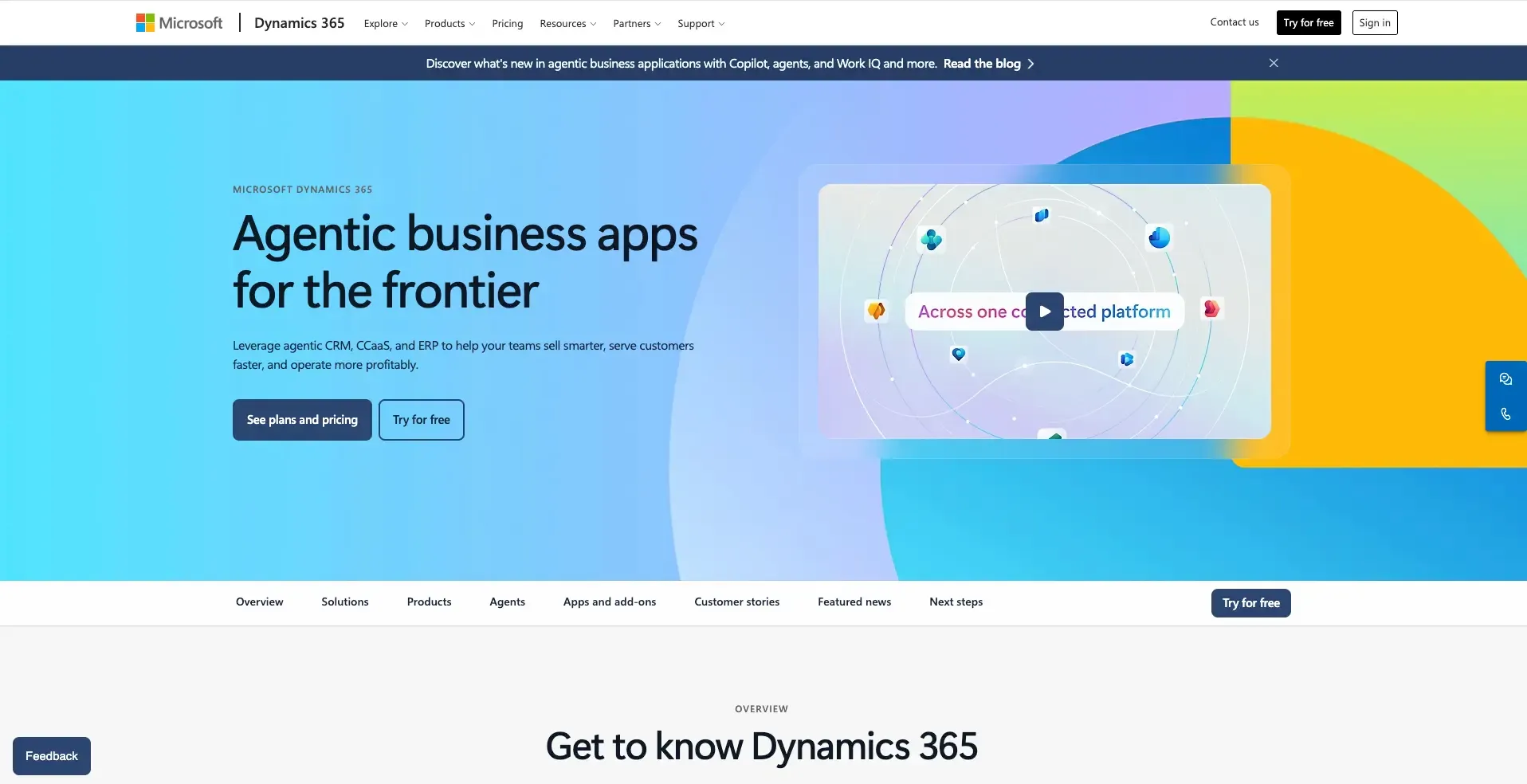
Microsoft Dynamics 365 is the only platform here that genuinely merges CRM and ERP into one system. The Sales and Supply Chain Management modules share a data layer; a rep creating a quote can pull live inventory and production capacity directly without a middleware tool or API call.
Copilot AI is embedded across Teams, Outlook, and the sales interface, summarising account activity, surfacing demand anomalies, and flagging supply chain risks in the flow of daily work.
Pros
- Deepest native CRM-ERP convergence available; sales and ops share one data layer
- Copilot AI works across the full Microsoft stack: Teams, Outlook, and sales dashboards
- Strong for multi-entity, multi-currency, and global manufacturing operations
- High customisability for complex manufacturing and supply chain workflows
Cons
- Long implementation timelines: expect 3 to 9 months with a certified partner
- Total cost increases rapidly when Supply Chain or Finance modules are added
- G2 score of 3.8 reflects consistent user complaints about UI complexity and support
Pricing: Contact Microsoft or a certified partner. Pricing varies significantly by module combination.
How it suits manufacturing
- Long sales cycle: structured pipeline stages plus Copilot-assisted follow-up keep reps on top of every deal
- Vendor and channel management: native distributor hierarchies and partner pricing tiers
- Trade-off: unmatched sales-to-production alignment, but only worthwhile on Microsoft infrastructure
3HubSpot CRM

Source: hubspot.com
Best for: Mid-market manufacturers with active inbound marketing and a structured inside sales team
HubSpot CRM is the most accessible platform here. Setup takes days, the free tier is genuinely functional, and the marketing automation tools lead the market for manufacturers running content-driven or event-driven lead generation alongside direct sales.
The AI email assistant, lead scoring, and deal pipeline builder handle mid-complexity manufacturing sales processes well; multi-step quote stages, automated follow-ups, and contact tracking across multiple deal stakeholders are all covered without heavy configuration.
Pros
- Free CRM tier is a genuine starting point, not a stripped-down trial
- Best marketing automation for manufacturers generating inbound leads
- Fast setup; most teams are running within a week
- Strong reporting and pipeline visibility dashboards out of the box
Cons
- ERP integration relies on third-party connectors, not native connections
- Contacts-based billing model scales cost fast for manufacturers with large distributor networks
- Less suited for multi-plant, multi-currency, or complex channel partner operations
Pricing: Free tier available. Paid plans from $15/user/month. Enterprise pricing requires a custom quote.
For detailed pricing comparison, explore our guide on HubSpot pricing
G2 rating: 4.4/5
How it suits manufacturing
- Long sales cycle: pipeline automation and AI follow-up sequences keep deals from stalling
- Vendor and channel management: tracks contacts and accounts, but no rebate or partner pricing tools
- Trade-off: best for rep-led, inbound-supported sales, not operationally driven manufacturers
4SparrowCRM
Best for: SMB manufacturing sales teams (10 to 50 people) that need AI-native deal management without enterprise complexity
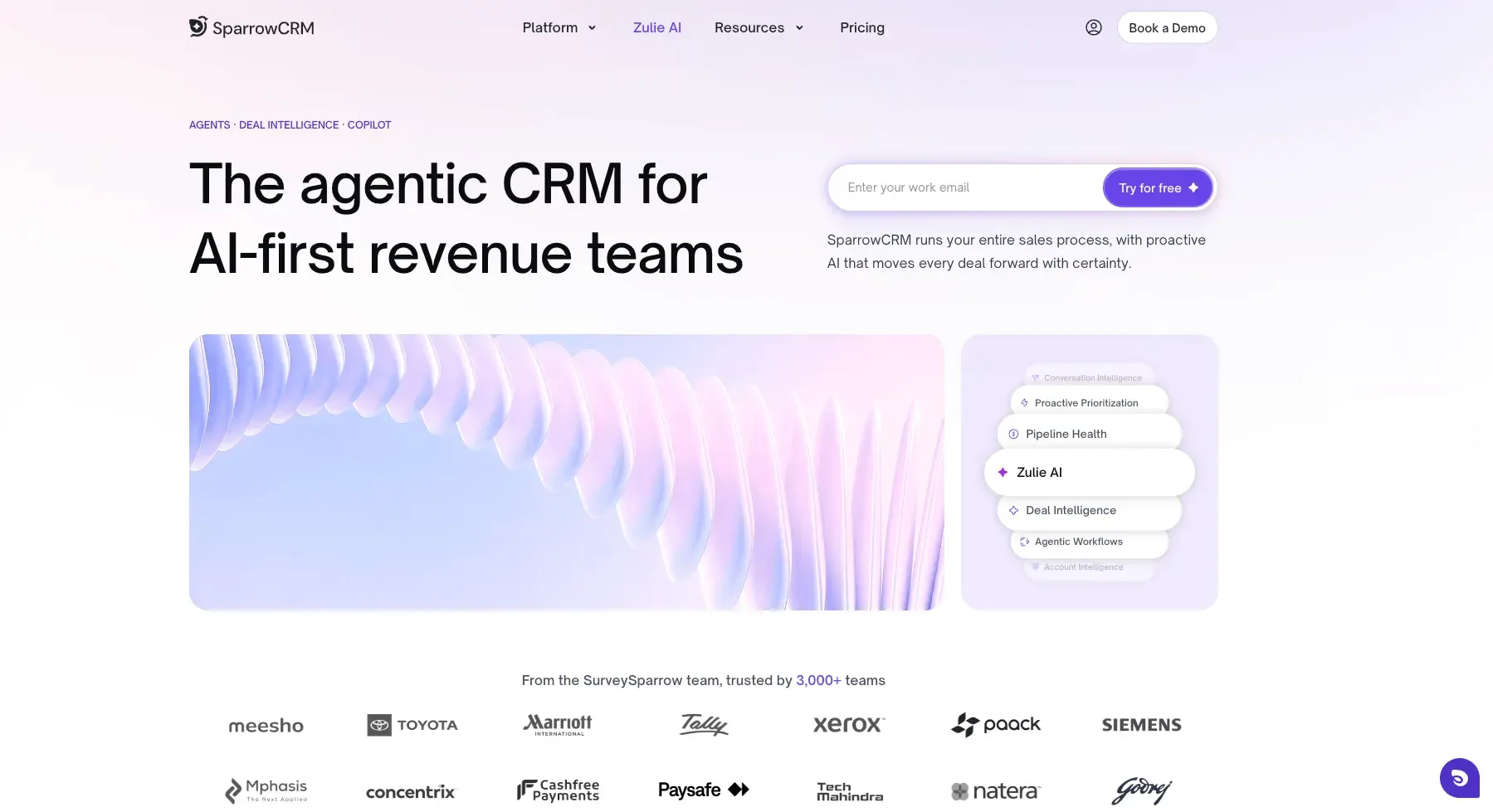
Most manufacturing teams at the 10-to-50-person scale share the same problem: deals are long, contacts multiply across each account, follow-ups fall through, and nobody has real visibility into which of the 20 open quotes will actually close this quarter. SparrowCRM is an AI-native CRM built for exactly that situation.
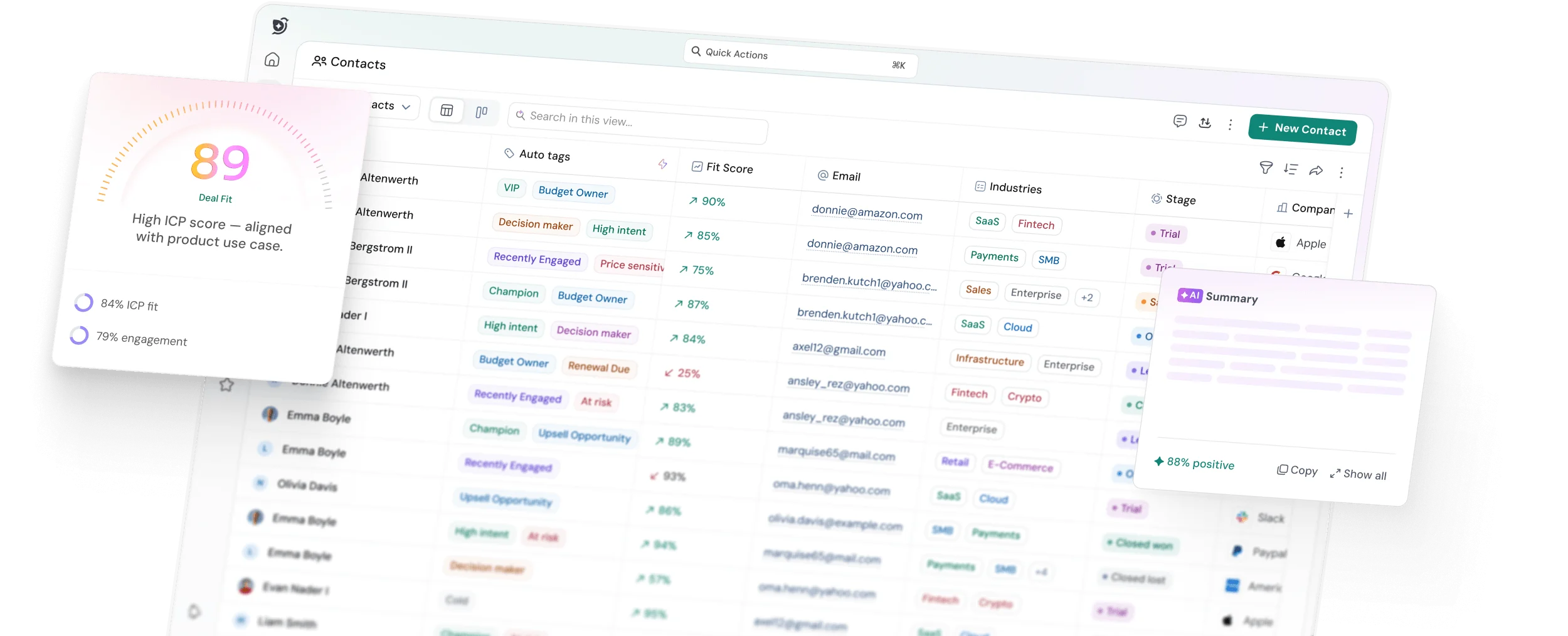
Deal scoring surfaces which opportunities need attention based on engagement signals and deal stage momentum. Buying committee tracking maps every stakeholder on an account. AI-powered next-action suggestions remove the guesswork from follow-up timing, without needing a dedicated CRM admin to maintain the system.
Pros
- AI-native from the ground up: deal scoring, buying committee tracking, and next-action suggestions built in
- Designed for SMB teams: fast setup, no dedicated admin required
- Strong deal health visibility across long manufacturing sales cycles
- Practical for teams managing high-volume quote pipelines simultaneously
Pricing: Free tier available for teams of three. Growth plan from $19/user/month. Pro plan at $49/user/month for teams needing deeper AI automation. Enterprise pricing is custom — contact SparrowCRM for a quote.
How it suits manufacturing
- Long sales cycle: deal scoring and AI follow-up suggestions keep multi-month quotes moving
- Vendor and channel management: buying committee tracking, but no rebate or partner portal tools
- Trade-off: fills the gap between basic pipeline tools and 9-month enterprise rollouts
Stop managing manufacturing deals with a generic CRM
5Zoho CRM
Source: zoho.com
Best for: Budget-conscious manufacturing SMBs already using Zoho tools
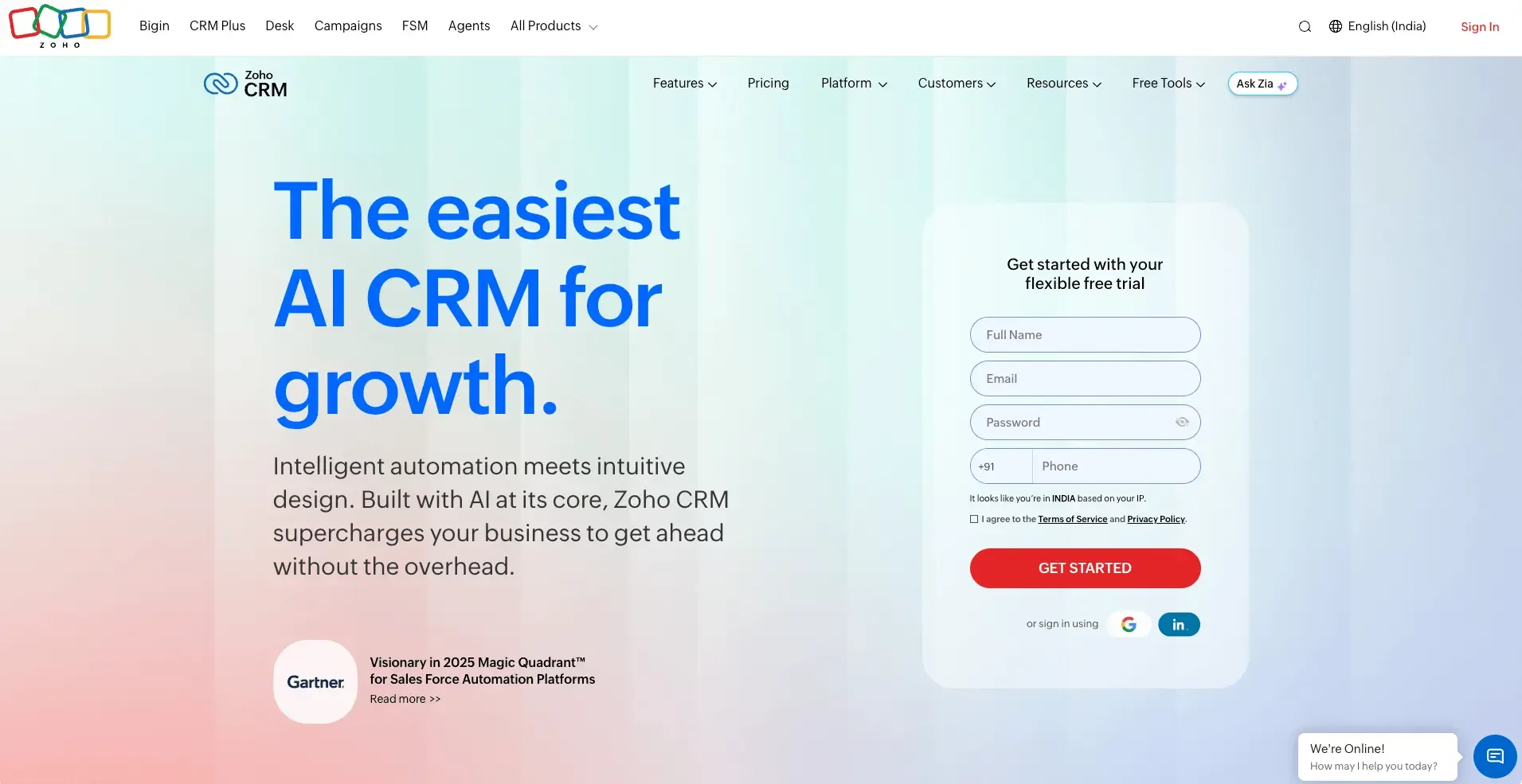
Zoho CRM earns its place through the Zoho ecosystem. If you're already on Zoho Inventory and Zoho Books, the CRM connects natively, giving sales reps live stock levels and order history inside the deal record without a third-party integration.
Zia AI handles predictive lead scoring, pipeline anomaly detection, and email sentiment analysis. Custom fields capture product specification data, serial numbers, and quote-specific details that generic CRMs can't handle out of the box.
Pros
- Native integration with Zoho Inventory and Zoho Books, best in-ecosystem inventory visibility
- Zia AI covers lead scoring, pipeline anomalies, and email analysis
- Most affordable entry point with genuine CRM functionality
- Custom fields handle manufacturing-specific data like product specs and serial numbers
Cons
- Integration quality drops sharply outside the Zoho ecosystem
- UI can feel cluttered for new users; adoption takes longer than HubSpot
- Advanced AI features are locked behind higher-tier plans
Pricing: From $14/user/month. Advanced tiers required for AI features.
G2 rating: 4.1/5
How it suits manufacturing
- Long sales cycle: stage automation and Zia scoring keep deals on track inside the Zoho stack
- Vendor and channel management: basic contact and communication logs, no rebate or partner tools
- Trade-off: works well inside Zoho's ecosystem, weaker once you connect an external ERP
If you are evaluating the zoho crm, have a look at our guide of zoho crm alternatives
Watch: Top 3 CRM Platforms for Manufacturing Teams in 2026
Explore the best CRM options for manufacturing sales teams and see how SparrowCRM, Salesforce Manufacturing Cloud, and Microsoft Dynamics 365 compare.
6Pipedrive

Source:pipedrive.com
Best for: Small manufacturing sales teams that want a clean visual pipeline with minimal setup
Pipedrive is built around one idea: a visual pipeline that sales reps will actually use every day. For a small manufacturing team with a straightforward quote process and fewer than 20 active deals at a time, it delivers that without the overhead of a more complex system.
The AI sales assistant flags stalled deals. Email integration handles follow-up sequences. Custom stages map to manufacturing quote steps. And the entire setup takes hours, not weeks.
Pros
- Visual pipeline is intuitive and drives daily rep adoption without training
- Fast setup; most small teams are live within a day
- AI assistant flags stalled deals and suggests follow-up actions
- Clean, affordable entry point for teams with straightforward sales processes
Cons
- No native ERP integration requires Zapier or API
- Multi-contact deal management is limited, not built for buying committees
- Reporting lacks the depth needed for manufacturing forecasting
Pricing: From $14/user/month.
For detailed pricing comparison, explore our guide on Pipedrive pricing
G2 rating: 4.3/5
How it suits manufacturing
- Long sales cycle: visible pipeline stages and follow-up reminders keep small teams organised
- Vendor and channel management: no buying committee, distributor, or channel partner tracking
- Trade-off: right for 2-to-10-person teams, outgrown fast as account complexity rises
What features should a manufacturing CRM have?
Not every CRM feature matters equally in manufacturing. These six directly address the industry's most common sales and operations challenges.
Feature | Manufacturing pain point solved | Why it matters |
|---|---|---|
ERP and inventory integration | Sales and ops work from different data; reps quote without knowing stock levels | Syncs live inventory and production lead times into the deal record so reps quote accurately without chasing the warehouse |
Long-cycle pipeline and quote management | Multi-month deals stall because follow-ups are manual and inconsistent | Stage-based automation sends follow-ups on time, and flags deals that have gone quiet for too long |
Multi-stakeholder contact tracking | Distributor, procurement lead, and plant manager all influence the deal; no one tracks all three | Maps every contact role on a deal so reps know who to call, when, and what they care about |
AI-powered deal scoring and lead prioritisation | Reps spend equal time on a $5K repeat order and a $300K new logo | Scores deals by close probability and revenue potential, so reps focus where it counts |
After-sales service and order history | Once the deal closes, the sales team loses visibility; upsell and service issues are missed | Logs service cases, warranty claims, and order history against the account for timely re-engagement |
Custom reporting and forecasting dashboards | Month-end forecasting requires a manual pull from three systems, slow and error-prone | Consolidates pipeline data, win rates, and revenue trends in one real-time dashboard |
If a CRM you're evaluating doesn't support at least four of these six natively, you'll spend the first six months building workarounds instead of closing deals.
For a complete look at CRM capabilities, see our CRM features guide.
How to choose the right manufacturing CRM for your team
The right CRM depends on three variables: your team size, your ERP stack, and your sales cycle complexity. Use this framework to narrow your options before requesting demos.
Team size under 20 people: Start with Pipedrive or Zoho CRM. Both give you a functional pipeline without implementation overhead. If your biggest problem is production-to-sales visibility and you're not ready for a separate ERP, look at MRPeasy first.
Team size 20 to 100 people: At this scale, deal complexity is high, and the cost of a missed follow-up is high. Consider SparrowCRM for AI-driven deal visibility, or HubSpot if inbound lead generation is a major channel. If you're still working through the evaluation, our guide on how to choose the right CRM covers the full framework.
Enterprise manufacturer (100+ users): Evaluate Salesforce Manufacturing Cloud or Microsoft Dynamics 365. Both require a certified implementation partner and a multi-month rollout. Both offer the depth, rebate management, run-rate forecasting, and native ERP convergence to match enterprise manufacturing complexity.
ERP integration is a priority: If your sales team can't quote accurately without live inventory and production data, native ERP integration is non-negotiable. Dynamics 365 is the strongest here. Salesforce is close behind with its manufacturing partner ecosystem.
Budget is the primary constraint: Zoho CRM gives you the most capability per dollar. HubSpot's free tier is a genuine starting point. For teams scaling quickly, see the CRM for small business guide for a breakdown by budget tier.


.png?2026-06-23T07:37:24.214Z)