LEAD MANAGEMENT
Best B2B prospecting tools for sales teams in 2026

By Ganesh Ravi Shankar
Last updated on Jul 6, 2026
Written by a CRM Business Head who evaluated each platform against real outbound and inbound workflows, not a feature checklist.
QUICK SUMMARY
Explore this blog to find the B2B prospecting tool that actually fits your team's size, budget, and workflow.
The Best B2B Prospecting Tools for Every Sales Team

AI-native prospecting starts here
See how SparrowCRM connects prospecting and CRM automatically.
Most sales teams still lose hours every week just finding people to talk to. Reps jump between LinkedIn, Google, and old contact lists, hoping the email address still works. That routine is exactly what a modern B2B prospecting tool, paired with a solid lead capture process, is built to fix.
This guide compares seven of the best B2B prospecting tools that sales teams actually use in 2026. You will see how each one handles contact data, pricing, and workflow. At the end, you will find a simple framework for picking the right tool for your team.
One more thing before the list: a prospecting tool only solves half the problem. The other half is getting that contact scored and into your CRM without a manual copy-paste step. We will come back to that gap at the end of this guide.
TL;DR
How we evaluated these tools
Four criteria decided where each tool landed on this list, especially as AI prospecting tools increasingly blur the line between a database and a full workflow platform.
- Data accuracy: are contact details verified and refreshed often?
- Workflow fit: how easily does the tool connect to a CRM or a sequencing platform?
- Pricing transparency: are plans and costs clear up front?
- Ease of use: can a rep get value in the first week, not the first month?
Comparison table: the best sales prospecting tools at a glance
Tool | Best for | Key differentiator | Starting price |
|---|---|---|---|
ZoomInfo | Enterprise teams needing scale and intent data | Largest verified contact database with buying signals | Custom pricing |
Apollo.io | Small to mid-size teams wanting data plus outreach | Contact database with built-in email sequencing | Free; from $49/mo |
UpLead | Teams that prioritize verified data accuracy | Real-time email verification at point of export | From $99/mo |
LinkedIn Sales Navigator | Relationship-based and social selling | Direct access to LinkedIn's professional graph | From $99.99/mo |
Cognism | Teams prospecting into Europe | Phone-verified mobile data, GDPR compliant | Custom pricing |
Lusha | Small teams needing fast contact lookups | Simple Chrome extension workflow | Free tier available |
Seamless.AI | Teams wanting real-time contact discovery | AI-powered real-time search vs. a static database | Free entry plan |
ZoomInfo
Best For
Enterprise teams needing scale and intent data
Key Differentiator
Largest verified contact database with buying signals
Starting Price
Custom pricing
Apollo.io
Best For
Small to mid-size teams wanting data plus outreach
Key Differentiator
Contact database with built-in email sequencing
Starting Price
Free; from $49/mo
UpLead
Best For
Teams that prioritize verified data accuracy
Key Differentiator
Real-time email verification at point of export
Starting Price
From $99/mo
LinkedIn Sales Navigator
Best For
Relationship-based and social selling
Key Differentiator
Direct access to LinkedIn's professional graph
Starting Price
From $99.99/mo
Cognism
Best For
Teams prospecting into Europe
Key Differentiator
Phone-verified mobile data, GDPR compliant
Starting Price
Custom pricing
Lusha
Best For
Small teams needing fast contact lookups
Key Differentiator
Simple Chrome extension workflow
Starting Price
Free tier available
Seamless.AI
Best For
Teams wanting real-time contact discovery
Key Differentiator
AI-powered real-time search vs. a static database
Starting Price
Free entry plan
The 7 best B2B prospecting tools in 2026
Here is a closer look at each tool, including where it fits, where it falls short, and what real users say about it on G2.
1ZoomInfo
Source: zoominfo.com
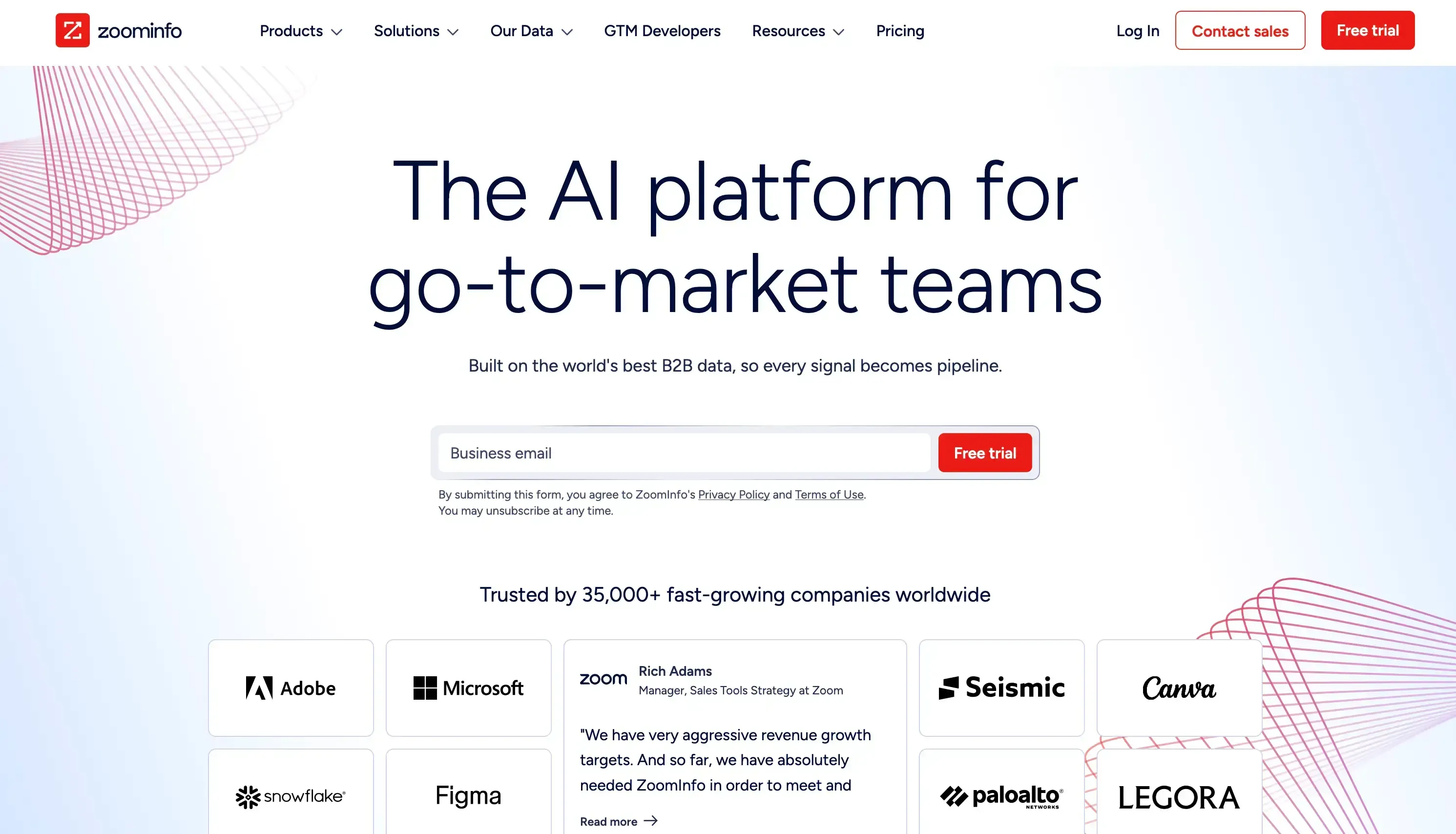
ZoomInfo is one of the largest B2B prospecting tools on the market, built around a massive contact database. It layers in buying signals, org charts, and technographic data, rather than just names and emails. For enterprise teams already running complex outbound motions, it is the platform most competitors get measured against.
Best for: Enterprise and high-volume outbound teams that need scale over simplicity.
Pros: Enormous, frequently refreshed contact database. Deep CRM integrations with Salesforce and HubSpot. Buying-signal alerts help reps prioritize in-market accounts.
Cons: Pricing is not public and tends to run high for small teams. The platform's depth can feel like overkill for basic contact lookups.
Review: 4.5/5
Pricing: Custom, quote-based.
2Apollo.io
Source: apollo.io
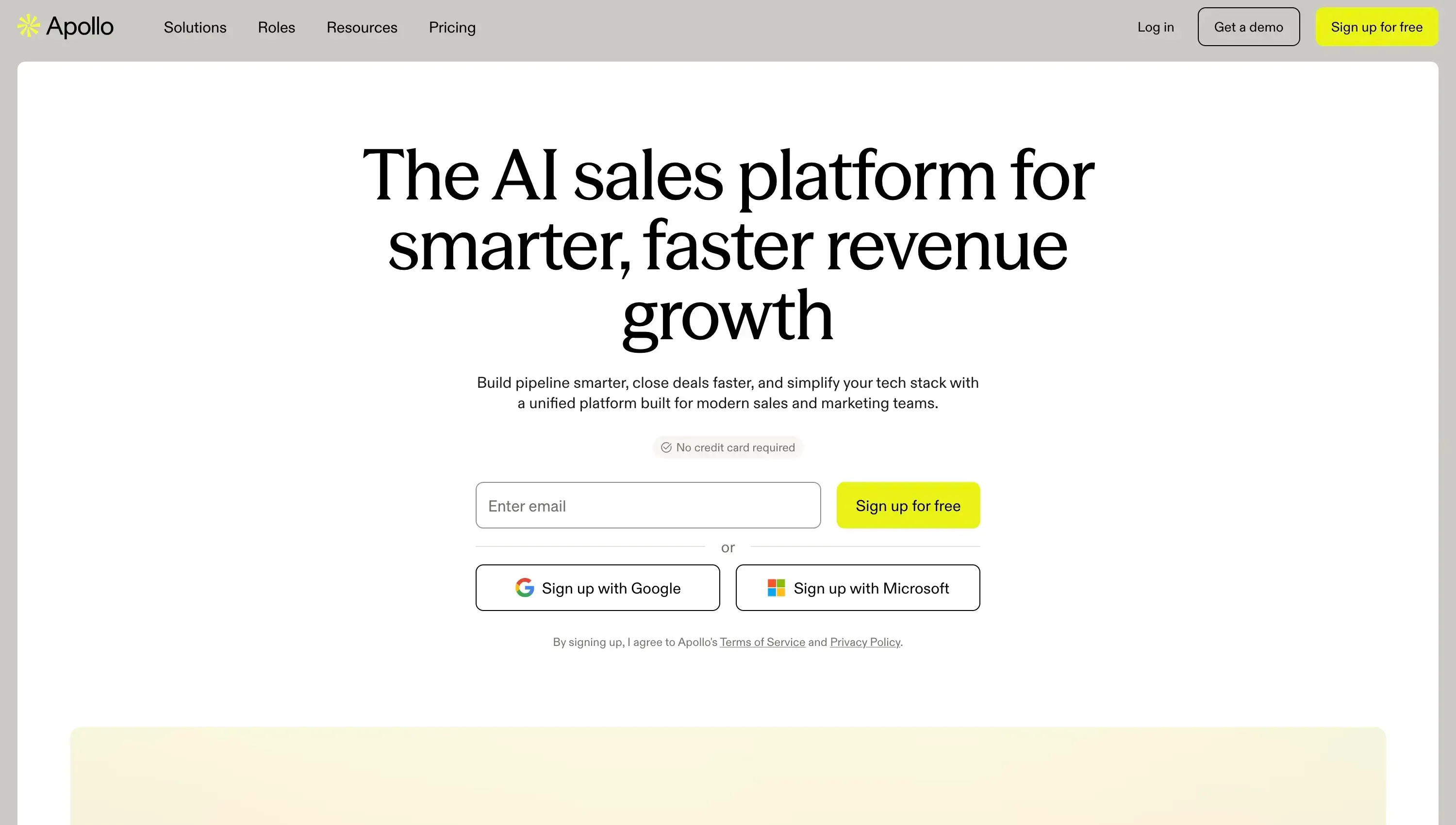
Apollo.io pairs a B2B contact database with built-in email sequencing and a dialer. It is designed so that a team does not need separate prospecting and outreach tools. That combination is a big reason it has become one of the more popular sales prospecting tools for smaller teams.
Best for: Small to mid-size teams that want data and outreach in a single platform.
Pros: Transparent pricing with a genuinely usable free tier. All-in-one workflow cuts down on tool-switching and fast setup, even for non-technical users.
Cons: Contact data accuracy can be inconsistent outside major markets. Some advanced features have a learning curve.
Review: 4.7/5
Pricing: Free tier available; paid plans start at $49 per user, per month.
3UpLead
Source: uplead.com
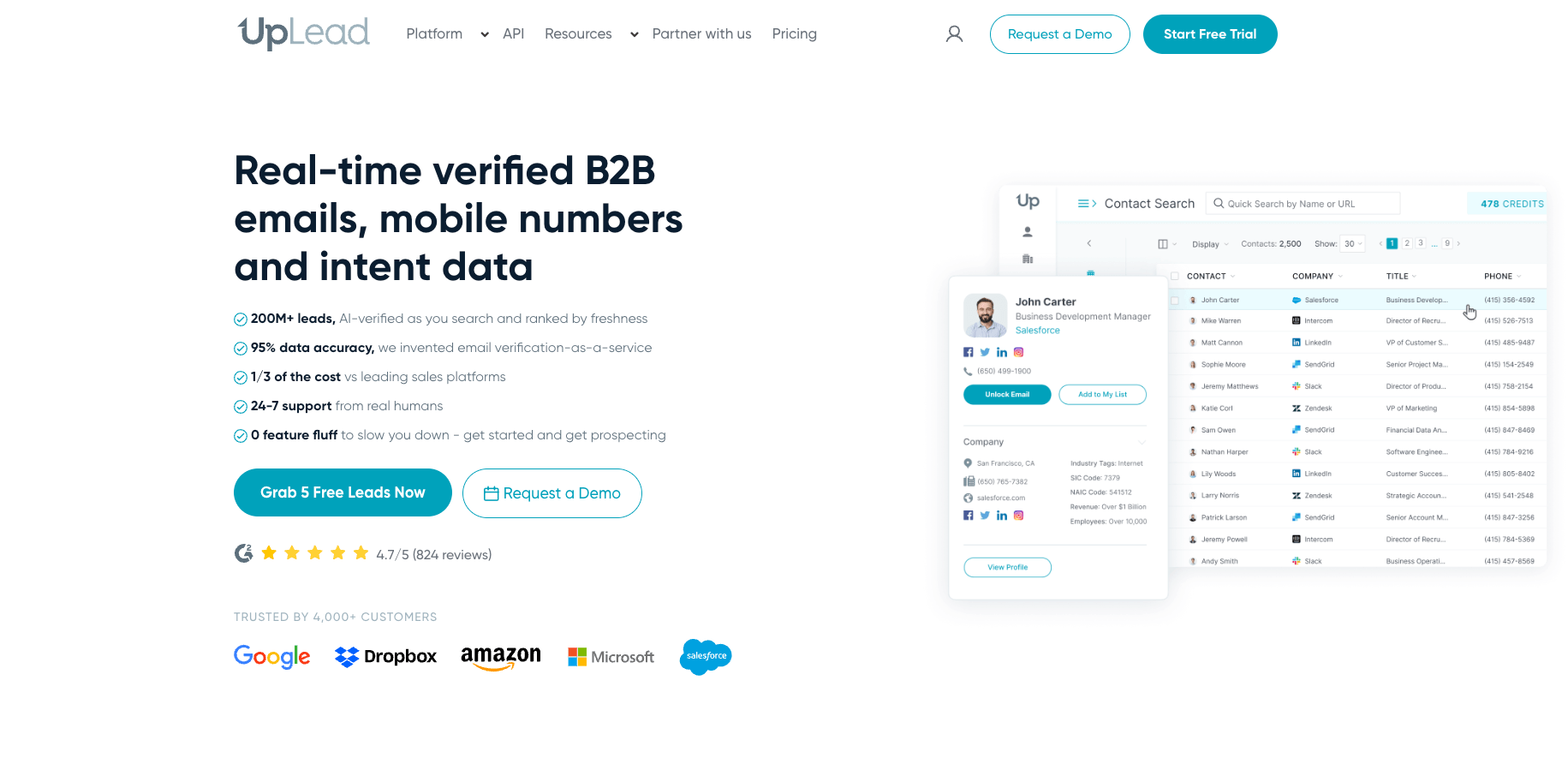
UpLead is a B2B lead generation platform built around real-time email verification. Instead of pulling from a stored list that can go stale, it verifies each contact at the point of export. That focus on accuracy over raw database size is its main selling point.
Best for: Teams that prioritize verified data accuracy over built-in outreach features.
Pros: Real-time email verification with a high accuracy claim. Over 50 search filters, including technographic data. Pay-as-you-go credit model with no long-term contract.
Cons: Smaller contact database than ZoomInfo or Apollo.io. No native sequencing or conversation intelligence tools.
Review: 4.7/5
Pricing: Essentials plan from $99/mo; Plus plan from $199/mo.
4LinkedIn Sales Navigator

Source: business.linkedin.com
Sales Navigator gives reps direct access to LinkedIn's professional network, which is still where a large share of B2B research starts. It is less about a contact database and more about relationship-based prospecting.
Best for: Reps whose motion depends on warm intros and social selling rather than cold outbound.
Pros: TeamLink shows which colleagues already have a connection to a target account. Advanced filters make it easy to build precise lead lists. Alerts flag job changes and other signals in real time.
Cons: It does not provide verified emails or direct-dial phone numbers on its own. Most teams pair it with a separate data tool for that reason.
Review: 4.3/5
Pricing: Plans start around $99.99 per month.
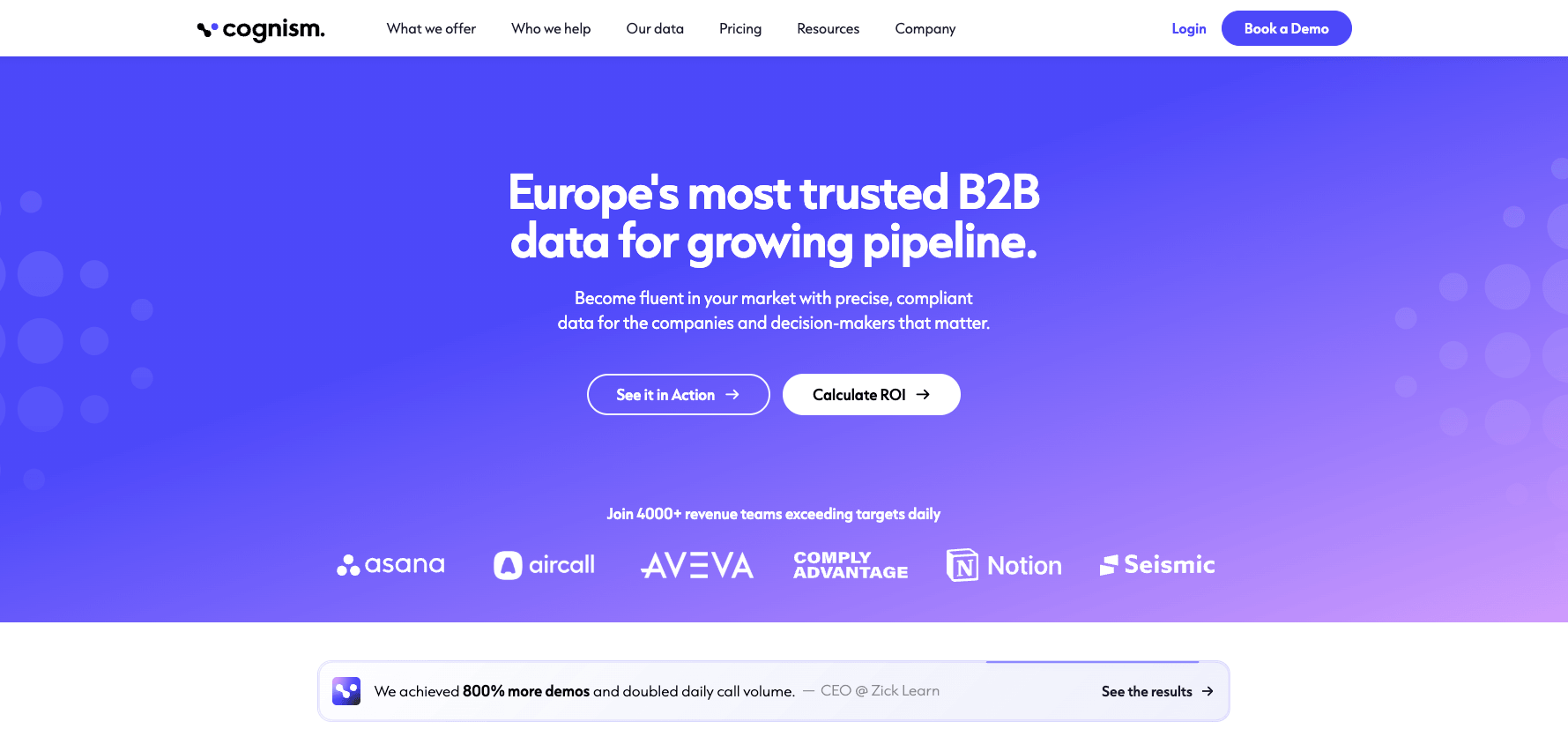
5Cognism
Source: cognism.com
Cognism focuses on phone-verified contact data, branded as Diamond Data, with a strong emphasis on GDPR compliance. It is built for teams that cannot afford compliance risk in their prospecting motion.
Best for: Teams prospecting into Europe or any region with strict data protection rules.
Pros: Mobile number accuracy is a genuine differentiator. Built-in compliance tooling reduces legal risk for global teams. Intent data adds another prioritization layer.
Cons: Pricing requires a sales conversation, with no public figures. It does not include native email sequencing.
Review: 4.5/5
Pricing: Custom, quote-based.
6Lusha
Source: lusha.com
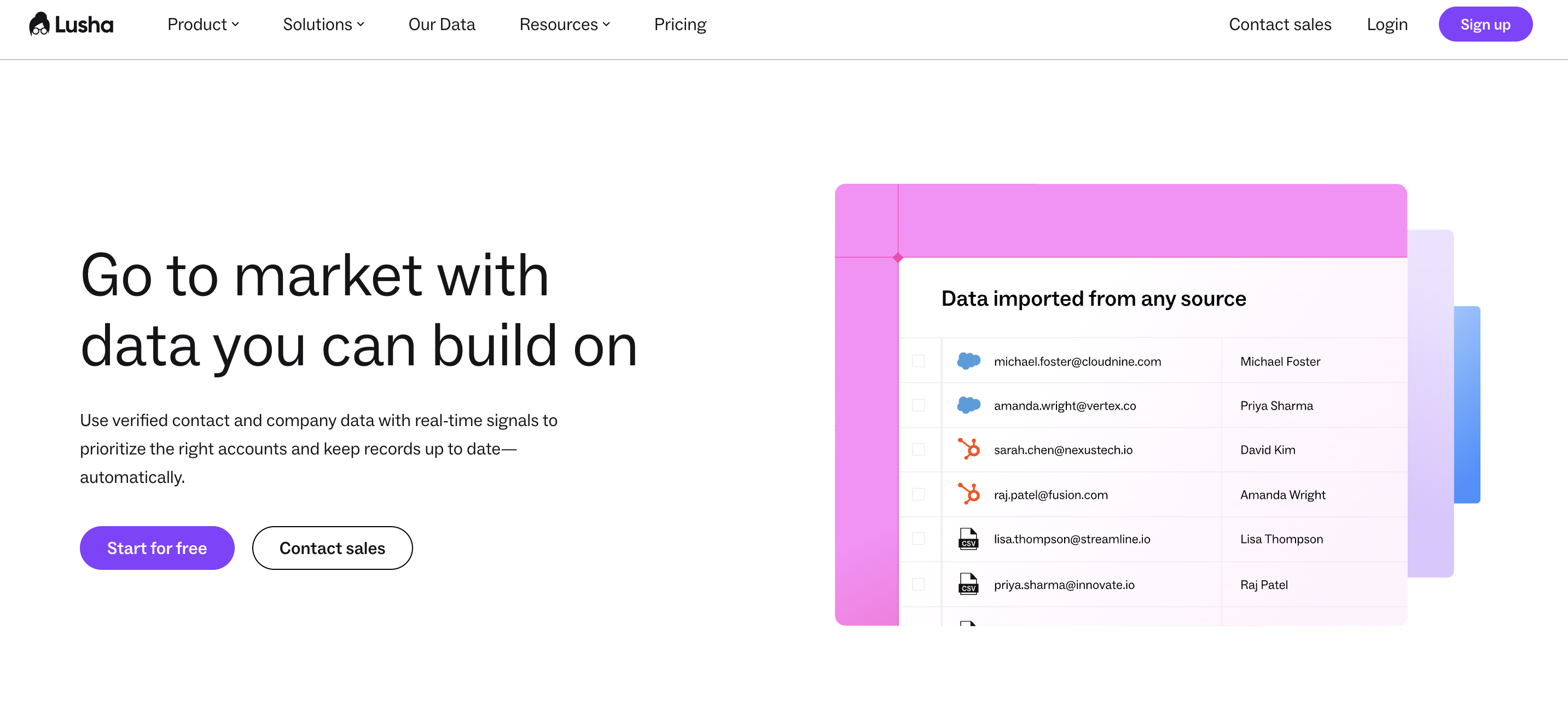
Lusha keeps things simple: a Chrome extension and web app for finding verified emails and phone numbers. It skips the heavier feature set that enterprise platforms carry.
Best for: Small teams and individual reps who need fast contact lookups without a big learning curve.
Pros: The interface is genuinely easy to pick up. A free tier makes it low-risk to try. The Chrome extension speeds up day-to-day prospecting on LinkedIn.
Cons: The database is smaller than enterprise-grade tools. Workflow automation and intent data are limited compared to other tools on this list.
Review: 4.3/5
Pricing: Free tier available; paid plans require contacting Lusha directly for current rates.
7Seamless.AI
Source: seamless.ai
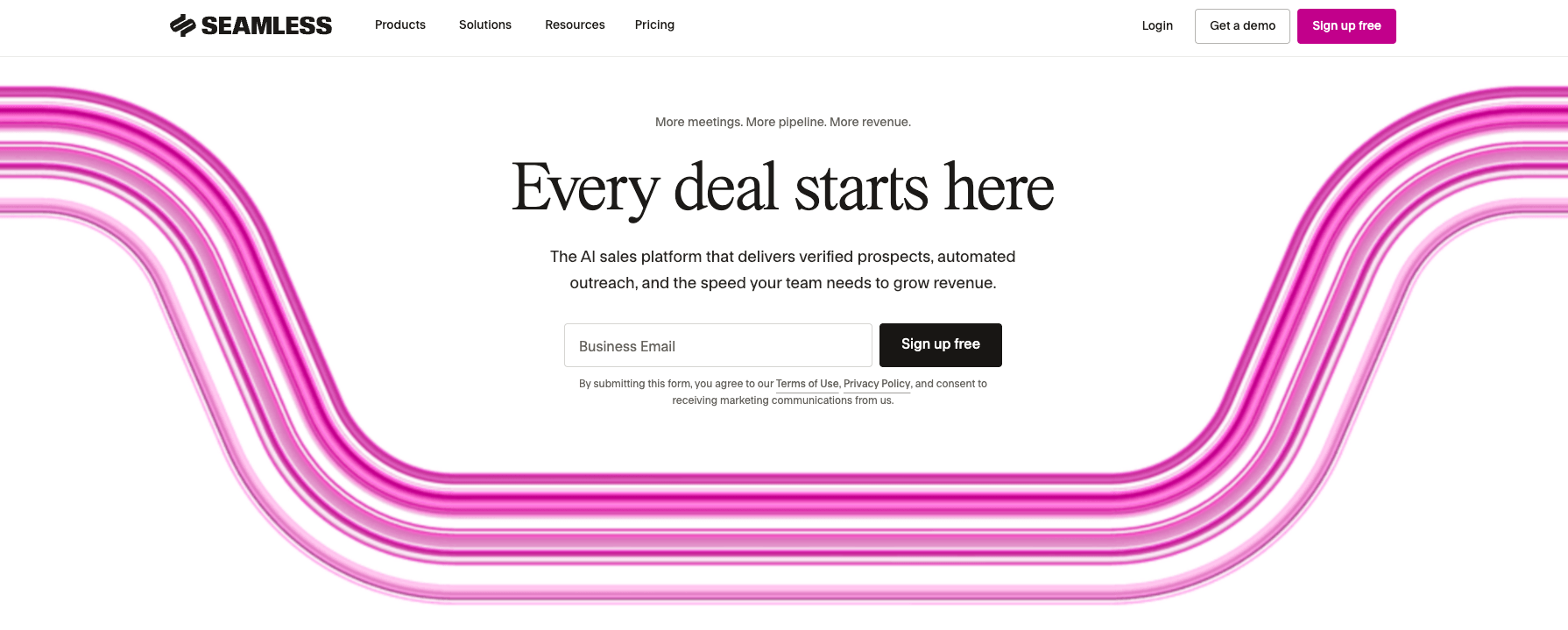
Seamless.AI is one of the more prominent AI prospecting tools built around real-time search rather than a static database. The idea is that contact data gets verified at the moment you look it up, not weeks earlier.
Best for: Teams that want on-demand contact discovery rather than a fixed database subscription.
Pros: Real-time, AI-powered search is a genuine point of difference. Free credits make it easy to test before committing. It integrates with most major CRMs.
Cons: Some reviewers report inconsistent accuracy and higher bounce rates on certain contacts. Large lists can be slow to work through in the interface.
Review: 4.4/5
Pricing: Free entry plan; paid plans require contacting Seamless.AI directly for current rates.
How SparrowCRM connects with your prospecting tool
Whichever tool you pick from the list above, the contacts still have to land somewhere your reps actually work from. That is usually where things break down: a CSV export, a manual import, and a contact that sits in the CRM with no score and no next step.
SparrowCRM is built to close that specific gap. Import contacts from ZoomInfo, Apollo.io, UpLead, LinkedIn Sales Navigator, Cognism, Lusha, or Seamless.AI, and SparrowCRM enriches and scores each one automatically the moment it lands in the pipeline. Reps get a suggested next action instead of a blank record they have to research from scratch.
This is not about replacing your prospecting tool. It is about making sure the data from it does not go stale the moment it leaves that platform. If that connection is missing from your current stack, it is worth a look at how SparrowCRM's AI-native CRM approach handles it.
Turn Prospects into Customers with SparrowCRM
How to choose the right B2B prospecting tool for your team
So, what is the best sales tool for B2B prospecting? Honestly, it depends on four things: your team size and budget, how much built-in outreach you need, whether compliance requirements apply, and whether you want prospecting to live inside your CRM or as a separate step.
1. What's your team size and budget?
Larger teams with a dedicated SDR function can usually justify ZoomInfo's cost. Smaller teams tend to get more value from Apollo.io or UpLead, where pricing is transparent from the start.
2. Do you need built-in outreach, or just data?
If your team already uses a sequencer, a pure data tool avoids paying for features you will not use. If not, an all-in-one platform like Apollo.io saves you a second subscription. Either way, it helps to review your cold email outreach process first, so you know what the tool actually needs to support.
3. Does compliance matter for your market?
Teams selling into Europe should weigh Cognism's compliance tooling heavily. US-focused teams generally have more flexibility here.
4. Do you want prospecting inside your CRM, or as a separate tool?
This is where most teams get surprised by hidden costs: manual exports, duplicate records, and reps re-typing the same contact twice. None of the seven tools above solve that last step on their own, since they are prospecting tools, not CRMs.
Final thoughts
There is no single best B2B prospecting tool for every team. ZoomInfo wins on scale, Apollo.io on all-in-one value, UpLead on data accuracy, and Cognism on compliance.
What matters more is matching the tool to how your team actually works, and planning for what happens once a contact is found. Pick the tool from this list that fits your workflow, then make sure your CRM is ready to pick up where it leaves off.

Frequently Asked Questions (FAQs)
Related Articles
.png?2026-04-29T08:40:11.350Z)
27 Apr, 2026
The 9 top deal management software for sales teams in 2026 (expert picks)
16 Apr, 2026
Best Apps for Sales Leads: 20 Tools Sales Reps Actually Use in 2026

04 Sep, 2025