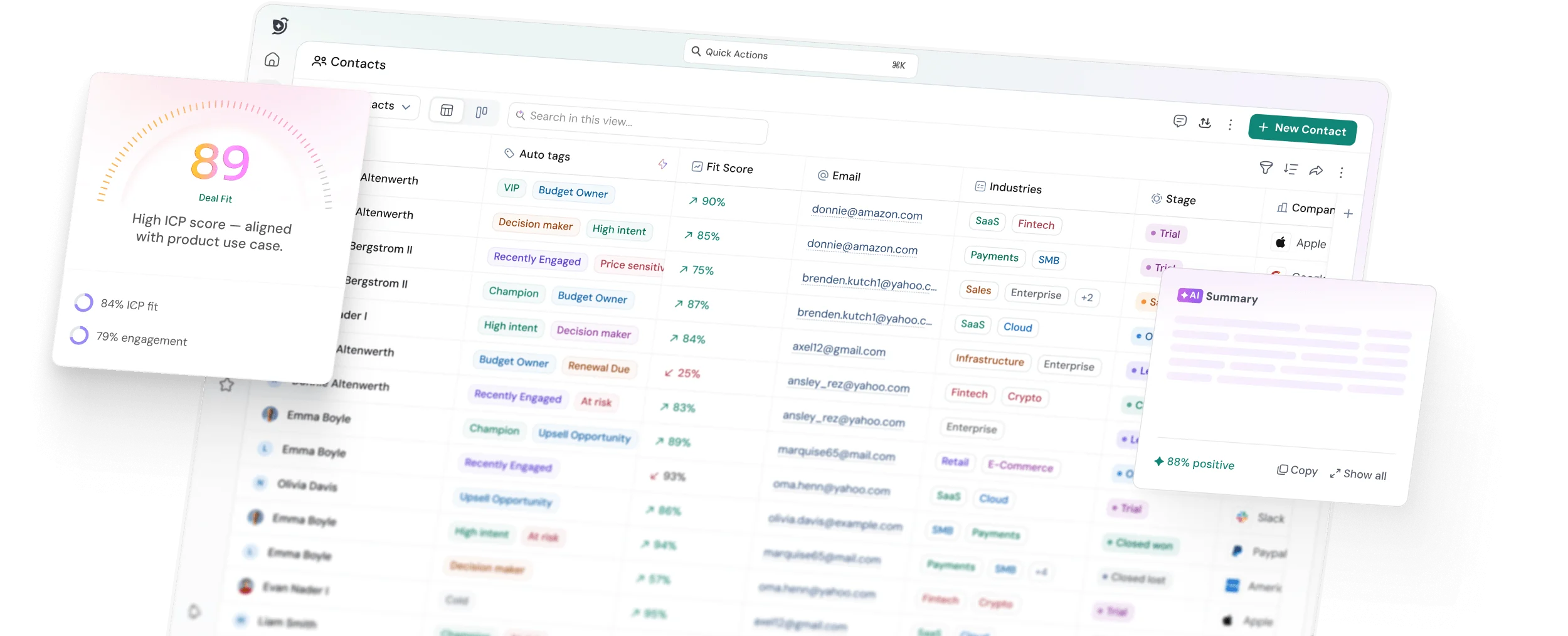
Sales process template for B2B sales teams
A practical B2B sales process template to define sales stages, set clear exit criteria, document key activities, assign ownership, and create a consistent process from prospecting to close.
- Define clear sales stages and exit criteria for every step of the sales cycle.
- Standardize activities, responsibilities, and handoffs across your sales team.
- Turn your documented process into a repeatable framework for better pipeline visibility and forecasting.
.webp)
What is a sales process template?
A sales process template is a reusable framework that defines each stage a deal moves through, with a specific exit criterion that determines when it advances. This framework standardizes how your team handles every chance from prospecting through closing instead of leaving sales execution to individual interpretation.
Why is a sales process important for B2B Teams?
- Creates consistency: Gives every sales rep a common way to manage opportunities.
- Improves pipeline visibility: Makes it easier to see where every deal stands and what needs to happen next.
- Defines clear next steps: Helps reps understand the actions required at each stage.
- Improves qualification: Establishes clear criteria for deciding which opportunities are worth pursuing.
- Makes forecasting easier: Consistent stages and criteria give managers more reliable pipeline data.
- Shortens rep ramp-up time: Gives new sales reps a documented process they can follow instead of learning through trial and error.
- Reduces stalled deals: Identifies what needs to happen before an opportunity can progress.
- Improves team collaboration: Creates clear responsibilities and handoff points between sales, solutions, RevOps, and customer success.
Who is this template for?
This template is designed for teams that want to document or improve the way they manage sales opportunities.
Sales managers
If different reps follow different approaches, the template can help you create a common framework for the team.
Sales reps
Use it to understand what should happen throughout the sales cycle and what information needs to be confirmed before progressing an opportunity.
RevOps teams
The template can provide a foundation for translating your sales methodology into CRM stages, required fields, workflows, and reports.
Growing sales teams
If your sales process still lives in spreadsheets, documents, or individual rep knowledge, the template gives you a structured starting point for formalizing it.
You don't need to follow the framework exactly. Adapt it to your sales cycle, customer journey, deal size, industry, and go-to-market model.

Proven templates used by high-performing sales teams.
How to use the sales process template?
Start by documenting your current process, rather than trying to design a completely new one. Look at how your team currently moves opportunities from first contact to closed business. Identify the stages that already exist, where opportunities commonly stall, and which activities actually indicate buyer progress.
Then use the template to formalize the process.
Step 1: Define your sales stages
List the major stages your opportunities move through. Keep them clear enough that every rep can understand what each stage means.
Step 2: Add stage criteria
For each stage, define what needs to happen before an opportunity can move forward.
Step 3: Document activities
Add the key actions, resources, questions, and stakeholders associated with each stage.
Step 4: Assign ownership
Clarify who owns each activity and where team handoffs occur.
Step 5: Connect it to your CRM
Once the process is finalized, map the stages and criteria to your CRM so your pipeline reflects the documented process.
Step 6: Review and improve
Your sales process shouldn't remain static. Review conversion rates, time in stage, win/loss data, and rep feedback regularly to identify opportunities for improvement.
What’s included in the sales process template?
The sales process template provides a complete framework for documenting and standardizing how your team moves an opportunity from first contact to a closed deal.
- Complete sales process flow: Map the entire journey from prospecting and qualification through closing and handoff.
- Stage definitions: Clearly define what each stage means and what happens within it.
- Process rules: Set the guidelines and conditions reps should follow throughout the sales process.
- Exit criteria: Define the specific requirements that must be met before a deal can move to the next stage.
- Roles and responsibilities: Clarify who owns each stage, activity, and handoff across the sales team and other stakeholders.
- Activities and actions: Document the key tasks reps need to complete at each stage
Final thoughts
You now have a complete framework for building and implementing your sales process template. Document your existing stages first, tie them to verifiable buyer commitments, and pilot with a small team. Note that your process should evolve based on real deal data and team feedback. The template works only when your team uses it. Roll it out, track the metrics, and refine as you go.
Frequently Asked Questions (FAQs)
A sales process template is a reusable framework that defines each stage a deal moves through, with specific exit criteria determining when it advances to the next stage. It standardizes how your team handles every opportunity from prospecting through closing, removing guesswork and ensuring consistency across all sales activities.

Turn your CRM into a revenue engine