CRM
What are the best practices for retail CRM?

By Geethapriya
Last updated on Oct 26, 2026
Explore the article to understand the best practices of retail crm which helps to improve customer retention and customer satisfaction

Geethapriya
Updated on Oct 26, 2026
Many retail stores already use a retail CRM, but often only to store customer details and contact lists, leaving its automation and other capabilities underused. This article covers retail CRM best practices to help you make the most of your CRM, streamline retail operations, and build stronger customer relationships.
What are retail CRM best practices?
Retail CRM best practices are a set of strategies and habits that retail sales and marketing teams follow to improve customer satisfaction, build stronger customer relationships, and increase customer retention. These practices help retailers use customer data, automation, and CRM features more effectively to deliver better shopping experiences.
Who should follow these retail CRM best practices?
Retail CRM best practices are useful for anyone responsible for managing customer relationships, sales, marketing, or store operations in the retail industry.
- Retail Store Managers: To track customer interactions, monitor store performance, and improve customer retention.
- Retail Sales Associates: To understand customer preferences, follow up on inquiries, and provide personalized shopping experiences.
- Retail Marketing Managers: To segment customers, run targeted campaigns, and automate promotions based on purchase history.
- Customer Experience Managers: To track customer feedback, resolve complaints, and improve customer satisfaction.
- Retail Operations Managers: To streamline store processes, maintain accurate customer records, and coordinate activities across multiple locations.
- E-commerce Managers: To connect online and offline customer data, track purchase behavior, and create consistent shopping experiences across channels.
- Retail Business Owners: To identify repeat customers, understand buying patterns, and make better decisions using customer data.

How are you currently using your retail CRM?
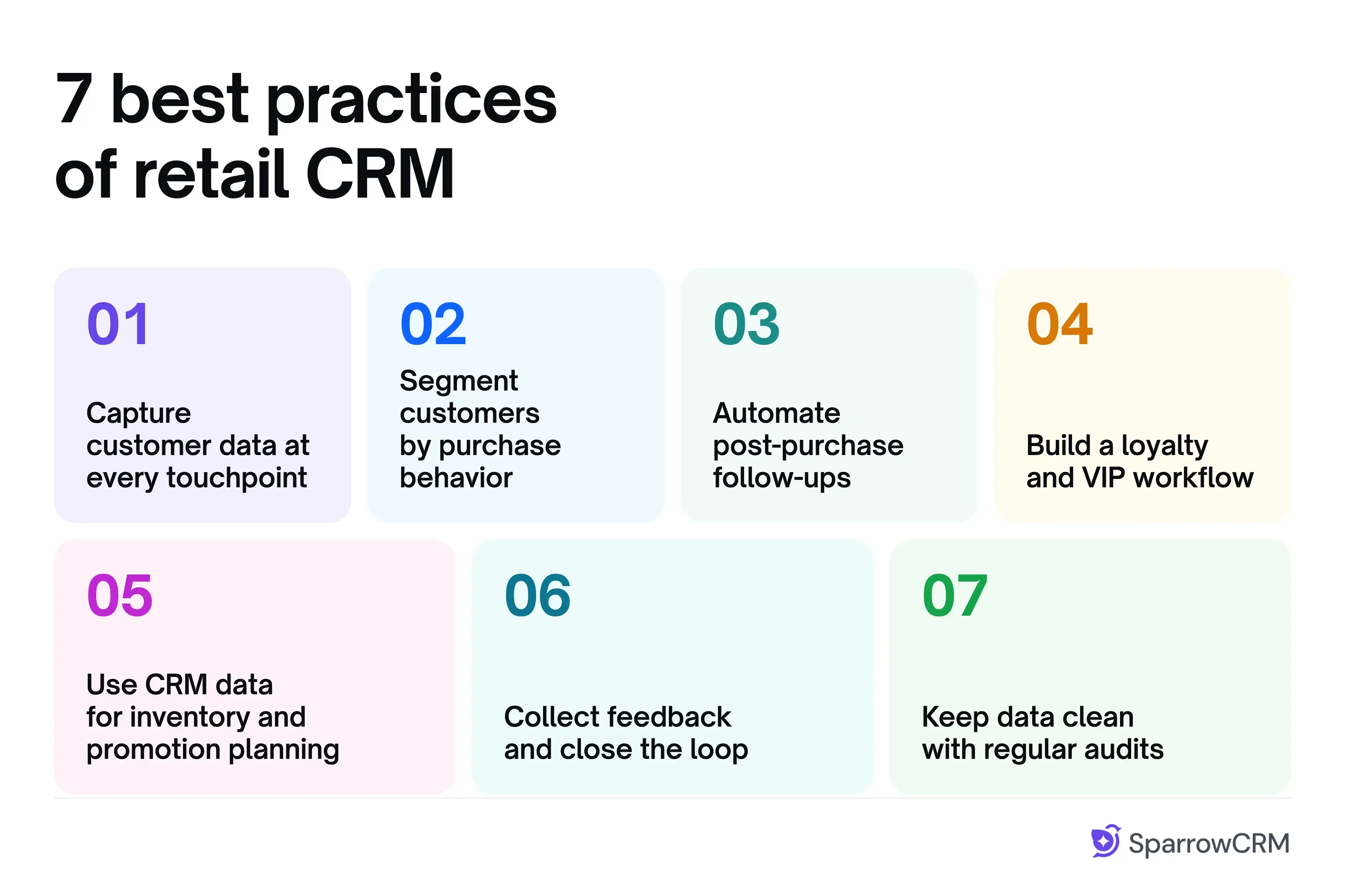
7 best practices of retail crm
1. Capture customer data at every touchpoint
I would say this is one of the most important practices for the success of retail crm implementation. Customers will interact with the brand in multiple channels like the app, website, WhatsApp, website chatbots, in-store, and Instagram.
If we have not connected all the possible channels, we will miss the purchase behaviour signs and customer signals. Connecting all the channels helps to win the retail strategy and improve customer satisfaction.
2. Segment customers by purchase behavior
Every customer in your CRM looks the same until you group them by how they actually buy. A first-time visitor and a customer who shops every month need very different messages. Send them the same offer, and you either annoy your regulars or lose your new buyers.
Customer segmentation means splitting your customer list into smaller groups based on shared traits. In retail, the most useful trait is purchase behavior, because it shows who is likely to buy again.
3. Automate post-purchase follow-ups
I would say this is one of the most important retail CRM practices. Once customers make a payment, they expect an order confirmation and the estimated delivery date via email or WhatsApp. Automating these updates helps build customer trust, reassures them about their purchase, and keeps them informed about their order status.
4. Build a loyalty and VIP workflow
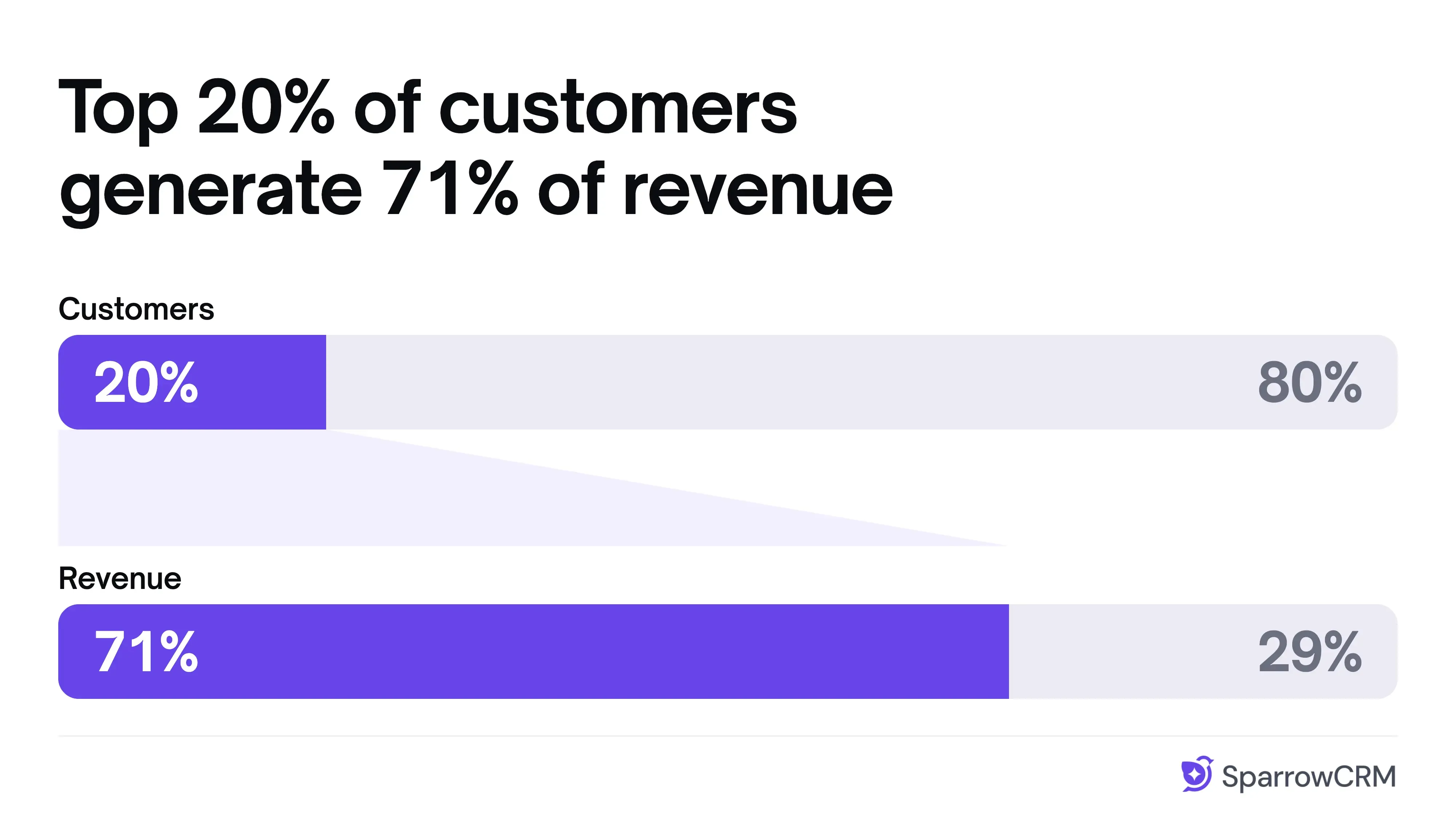
In every retail business, the top 20% of customers by spending generate 71% of revenue, so making 20% of customers feel special is important in the retail business. The foremost is implementing a loyalty program; it should connect to your retail store system and blend with it.
Move the top 20% of customers to the top tier of the loyalty program, like an all-time discount on purchases and early access to sales seasons; this makes customers stay with the brand.
5. Use CRM data for inventory and promotion planning
Most retailers plan stock and promotions from sales reports alone. Those reports tell you what sold, but not who bought it or whether they will buy again. Your CRM fills that gap because it ties every product to a real customer and their buying history.
Inventory and promotion planning means deciding what to stock, how much to order, and which products to push, and when. With CRM data, you base those decisions on customer behavior rather than guesswork.
6. Collect feedback and close the loop
Many retailers send a feedback survey, collect the scores, and never act on them. Customers notice when their complaint disappears into silence. The next time, they skip the survey and quietly shop somewhere else.
Closing the loop means responding to every piece of feedback with an action the customer can see, in retail that turns an unhappy buyer into a customer who trusts your store more than before.
7. Keep data clean with regular audits
Every best practice in this list depends on one thing: accurate customer data. Duplicate records split a customer’s history across two profiles. Wrong phone numbers make your campaigns bounce. Over time, messy data quietly breaks your segments, automations, and reports.
A data audit is a scheduled check of your CRM records to find and fix errors. It is the core habit of good CRM data hygiene. In retail, it keeps your customer list accurate enough to trust for every campaign you run.
Common retail CRM mistakes to avoid
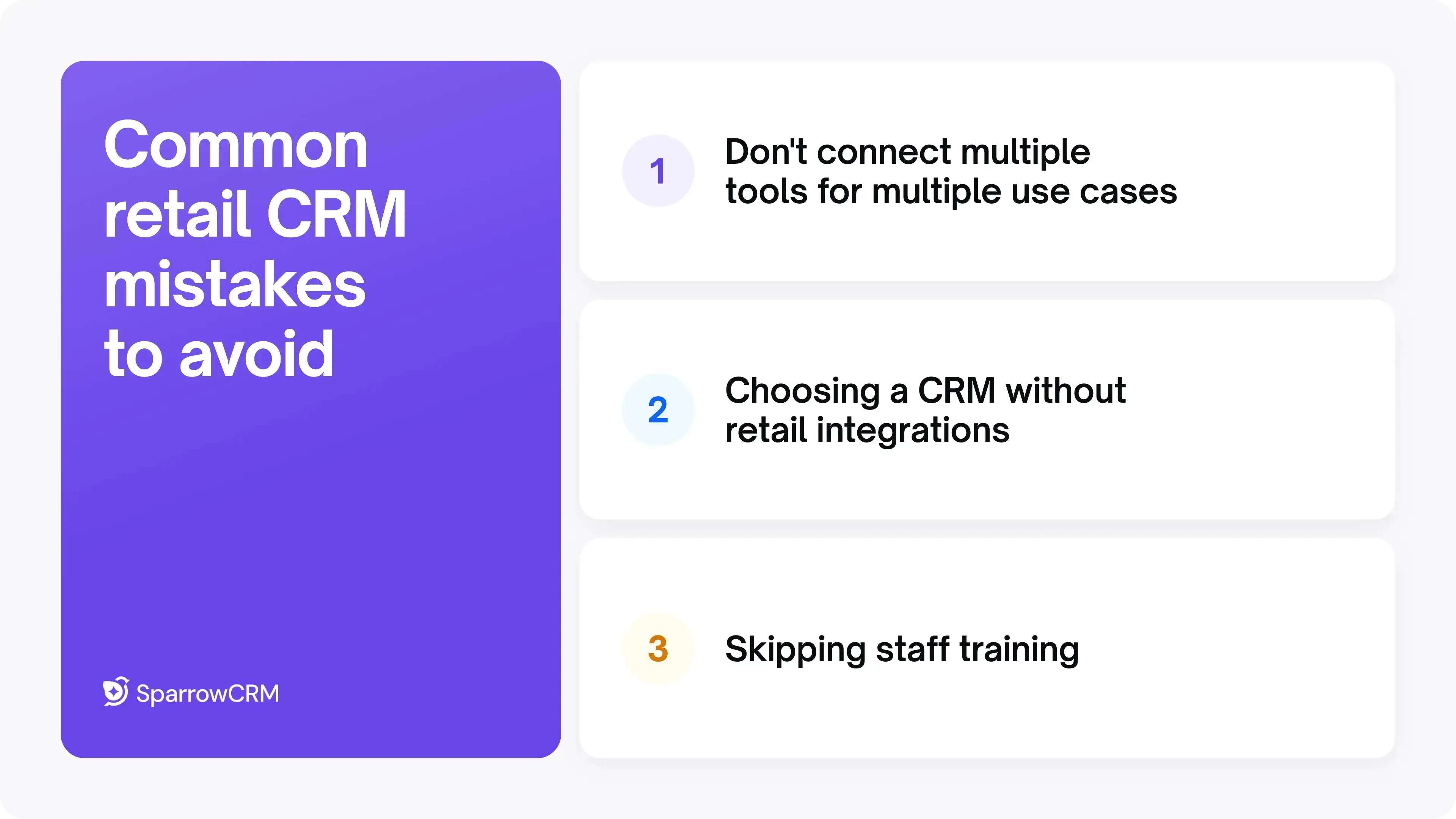
1. Don't connect multiple tools for multiple use cases
I’ve seen many businesses rely on separate tools for different needs, such as Shiprocket for checkout, Kwik for COD, Nector for loyalty programs, Klaviyo for marketing, and Judge.me for reviews. Using multiple tools can increase costs and make it harder to bring customer data together, analyse it, and build an effective strategy.
2. Choosing a CRM without retail integrations
In retail, integrations are essential when choosing a CRM. From my perspective, retail teams need a CRM with ready CRM integrations for the tools they use across the sales process, such as POS, e-commerce, WhatsApp, and email.
Since multiple departments rely on customer data to do their jobs, disconnected systems can create data silos and make it harder to deliver a consistent customer experience.
3. Skipping staff training
Quarterly training for everyone, from billing staff to e-commerce managers, is essential for accurate customer data capture across retail systems. Retail operations are interconnected, and when one team fails to capture or update customer information correctly, it can affect the entire process and lead to a poor customer experience.
Bottom line
The right retail CRM is more than a place to store customer data. It helps you connect teams, unify customer information, personalise interactions, and build long-term customer relationships. Choose a CRM that fits your retail operations, integrates with your existing tools, and makes it easier for your team to turn customer data into better experiences and repeat purchases.

Geethapriya
Geethapriya is a Growth Marketer and Business Researcher who researches and writes about CRM, sales, marketing, and customer engagement. Her work focuses on understanding industry trends, customer and sales challenges, and how businesses can use technology to build more effective growth processes.