SALES STRATEGY
Inbound vs outbound sales: which strategy fits your growth stage?

By Ganesh Ravi Shankar
Last updated on Sep 3, 2026
Explore this blog to understand how inbound and outbound sales differ, when each one works best, and which software supports each motion.

- What is inbound sales?
- What is outbound sales?
- Quick video: Inbound vs. outbound sales
- Inbound vs outbound sales: key differences
- When should you prioritise inbound sales over outbound sales?
- When should you prioritise outbound sales over inbound sales?
- Customer journey of inbound sales
- Customer journey of outbound sales
- Top 5 software tools for outbound sales teams
- Top 5 software tools for inbound sales teams
- Final thoughts
Inbound and outbound sales are both essential for driving revenue. But the right balance between the two depends on your business stage, growth goals, and the type of customers you're trying to reach.
Rely too heavily on one strategy, and you may miss valuable opportunities. In this guide, you'll learn the differences between inbound and outbound sales, when to use each approach, how they work together, and the software tools that help sales teams succeed with both.
What is inbound sales?
Inbound sales is a sales approach where potential customers discover your business and reach out because they're already looking for a solution. These prospects have usually researched the problem, evaluated different vendors, and identified your product or service as one of the options worth considering. Since they have already shown intent, inbound leads generally have a higher chance of converting.
Common inbound sales channels include:
- Search Engine Optimisation (SEO): Publish content that ranks on search engines so potential customers can discover your business while researching solutions.
- Referrals: Existing customers, partners, or industry contacts recommend your business to people who trust their opinion.
- Search Engine Marketing (SEM): Run paid search campaigns that appear when buyers actively search for relevant products or services.
- Content Marketing: Create blogs, guides, case studies, videos, and other educational content that attracts and nurtures potential buyers.
- Webinars and Podcasts: Share expertise through live sessions or industry discussions to attract engaged prospects and generate qualified leads.
What is outbound sales?
Outbound sales is a sales approach where your team proactively reaches out to potential customers instead of waiting for them to discover your business. These prospects may not yet be actively searching for a solution, so the goal is to introduce your product, educate them about the problem you solve, and generate interest.
Common outbound sales channels include:
- Cold Calling: Contact potential customers by phone to introduce your product, understand their challenges, and book sales meetings.
- Cold Email: Send personalised emails to targeted prospects to start conversations and generate interest.
- LinkedIn Outreach: Connect with decision-makers through personalised messages and relationship-building on LinkedIn.
- Field Sales: Meet prospects in person through office visits, events, or industry conferences to build trust and close deals.
- Affiliate or Partner Outreach: Work with affiliates, consultants, or strategic partners who introduce your solution to their network in exchange for incentives.
Quick video: Inbound vs. outbound sales
Prefer a quick watch? See how inbound and outbound sales differ, when each approach works best, and how sales teams use both to generate and convert opportunities. Watch the short video below for a quick breakdown before diving into the details.
Inbound vs outbound sales: key differences
Factor | Inbound sales | Outbound sales |
Approach | Pull, the prospect initiates contact | Push, the rep initiates contact |
Primary goal | Convert demand that already exists | Create new demand and pipeline |
Best-fit business stage | Post product-market fit, with some brand visibility | Pre-launch or early-stage, building first awareness |
Lead temperature | Warm to hot | Cold to warm |
Ease of close | Faster, prospect is already informed | Slower, needs more nurture and trust-building |
Relative cost per lead | Lower once content and SEO compound | Higher, since each contact needs manual or tooled effort |
Primary tools | CRM with lead scoring, SEO and content tools, scheduling software | Contact databases, sales engagement platforms, dialers |
Sign Up and Get 3 Free CRM Users
When should you prioritise inbound sales over outbound sales?
Inbound sales becomes more effective once your business has established brand awareness and buyers actively recognise your product category.
At this stage, prospects are already searching for solutions, comparing vendors, and discovering your business through search engines, referrals, content, and reviews. Instead of spending most of your resources finding prospects, your sales team can focus on converting qualified buyers.
Companies with a strong inbound engine often benefit from:
- Lower customer acquisition costs (CAC) because buyers come to them instead of requiring extensive prospecting.
- Higher-quality leads with stronger purchase intent.
- More predictable pipeline through organic traffic, referrals, and content marketing.
- Better long-term scalability, as content and SEO continue generating leads over time.
That doesn't mean outbound should stop. Even companies with strong inbound demand continue using outbound sales to reach strategic accounts, enterprise buyers, and new market segments.
For many growing SaaS companies, inbound becomes the primary source of pipeline while outbound complements it by targeting high-value opportunities that may not be discovered organically.
When should you prioritise outbound sales over inbound sales?
Outbound sales is often the fastest way to generate pipeline for companies entering a new market or launching a new product. At this stage, very few potential customers know your brand, your website has limited search visibility, and SEO or content marketing may take months to produce consistent results.
By proactively reaching out to ideal customers, your sales team can validate product-market fit, gather customer feedback, and win the first set of customers who become case studies and references.
Outbound sales is especially valuable when you:
- Launch a new company or product.
- Sell high-value B2B products with a limited number of target accounts.
- Need revenue in the short term while building long-term inbound channels.
- Want to test messaging and learn customer objections quickly.
- Are expanding into a new industry or geographic market.
For most startups, outbound sales creates the first customer relationships. Those early customers provide testimonials, reviews, and success stories that strengthen inbound marketing efforts through social proof.
As brand awareness grows, companies typically increase investment in SEO, content marketing, webinars, referrals, and other inbound channels while maintaining outbound for strategic account acquisition.
Customer journey of inbound sales
1. Awareness
The buyer recognises a problem and discovers your business through channels like search engines, referrals, content marketing, webinars, or social media. They begin researching solutions without interacting with a sales representative.
2. Consideration
The prospect evaluates your product by reading blogs, case studies, reviews, pricing pages, and comparison content. They build trust in your brand and determine whether your solution meets their needs.
3. Decision
Once ready, the prospect requests a demo, starts a free trial, or contacts your sales team. Since they've already done their research, the sales conversation focuses on solving their specific business challenges and closing the deal.
Customer journey of outbound sales
1. Prospecting
The sales team identifies ideal customers based on factors such as industry, company size, job role, or buying signals. Sales representatives then reach out through cold calls, cold emails, LinkedIn, events, or partner introductions to create awareness.
2. Engagement
If the prospect responds, the sales representative qualifies the opportunity, understands the prospect's challenges, and demonstrates how the product solves their problems through discovery calls, meetings, or product demos.
3. Decision
After follow-ups, objection handling, pricing discussions, and stakeholder approvals, the prospect decides whether to move forward. The CRM helps track engagement, buying signals, and next steps to increase the chances of closing the deal.
Top 5 software tools for outbound sales teams
These five cover the core outbound motion: finding the right contacts, reaching them across channels, and keeping deliverability healthy.
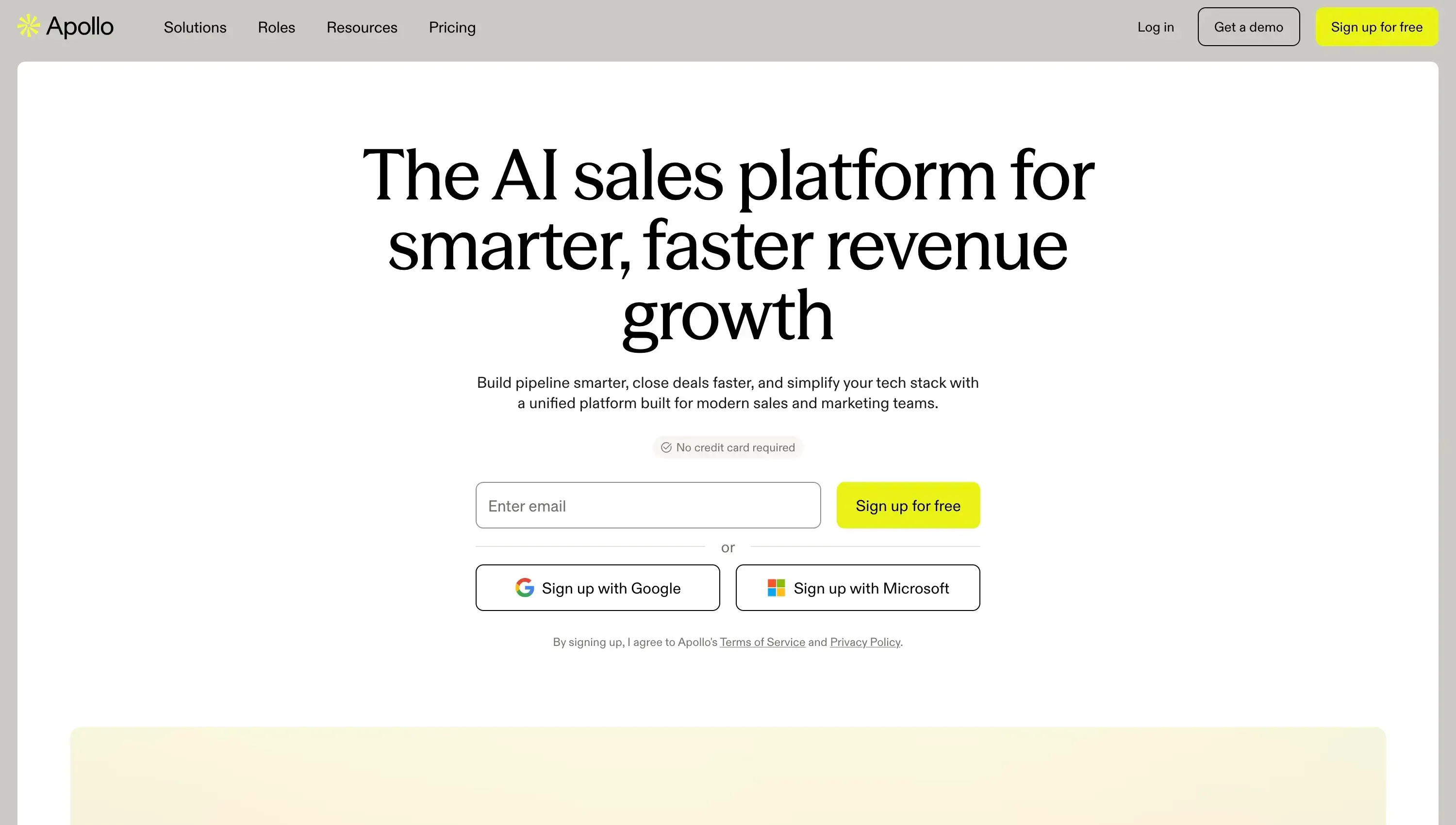
1. Apollo.io
Source: apollo.io
Overview: an all-in-one contact database, email sequencing, and dialer built for early-stage B2B teams that want one tool instead of a stitched-together stack.
Pros
- Large, frequently updated contact database with 65+ filters, including technographics and buying intent.
- Built-in Chrome extension speeds up manual prospecting from LinkedIn or any website.
- Strong price-to-value for SMBs and startups compared to enterprise-grade alternatives.
Cons
- Data accuracy can be inconsistent, so some bounce rate should be expected.
- Multichannel sequencing depth is thinner than dedicated engagement platforms at scale.
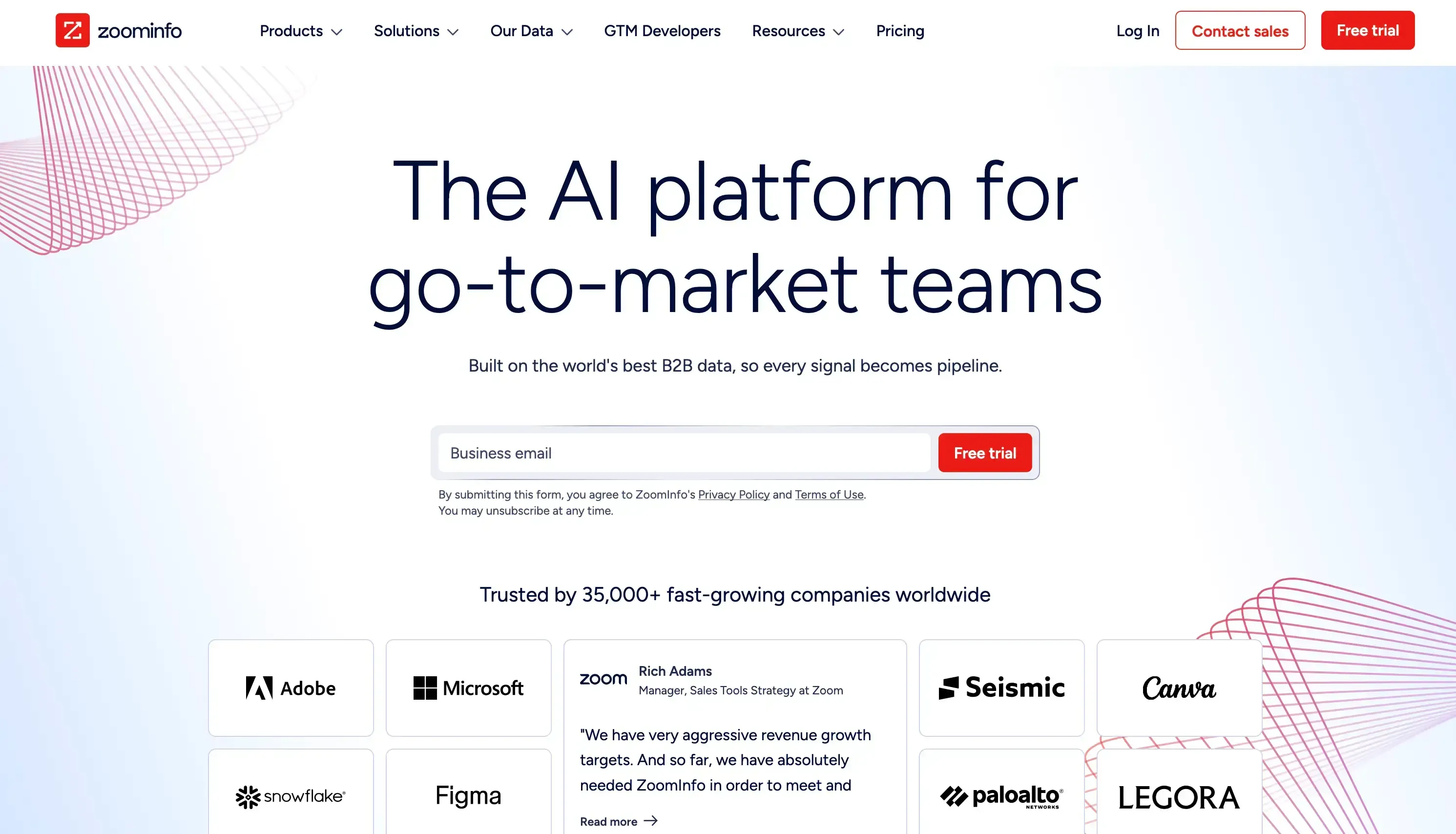
2. ZoomInfo
Source: zoominfo.com
Overview: a deep, verified B2B contact and intent-data platform with a broader GTM workspace and an AI copilot layered on top.
Pros
- Strong data accuracy and direct-dial match rates compared to most competitors.
- Intent signals help teams prioritize actively in-market accounts.
- Scales well for enterprise outbound teams running high-volume, multi-rep motions.
Cons
- Pricing is not built with startups or small teams in mind.
- The platform's breadth can be more than a lean team actually needs.
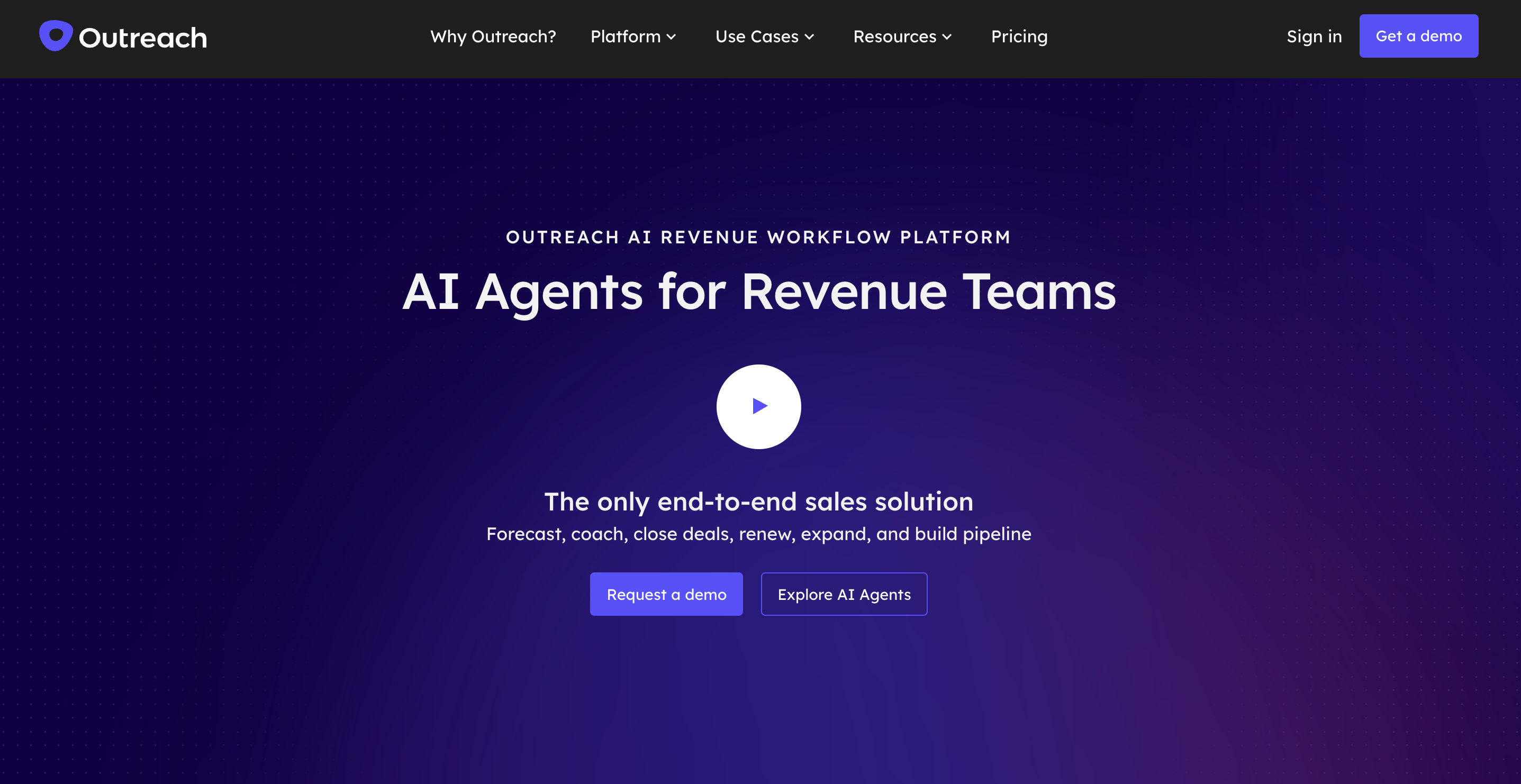
3. Outreach
Source: outreach.io
Overview: sales engagement platforms that sit on top of the CRM and manage cadences, call logging, and sequence automation for larger rep teams.
Pros
- Structured, multi-channel cadences at scale with shared sequence governance.
- Strong reporting for managers tracking rep activity and cadence performance.
- Integrates tightly with major CRMs, keeping activity data in sync.
Cons
- Adds real cost and setup overhead that is hard to justify below a certain team size.
- Reps have to learn another tool on top of the CRM itself.
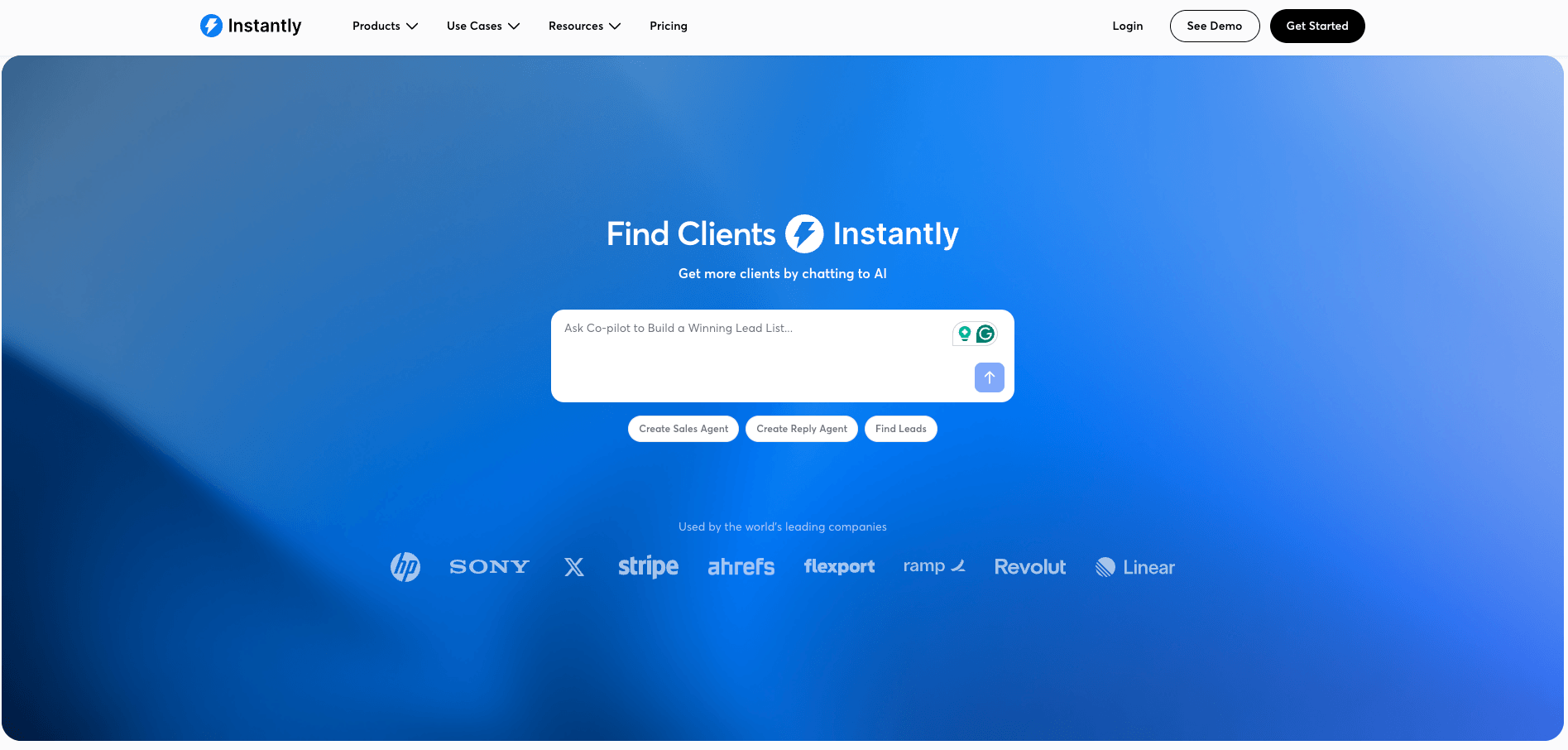
4. Instantly.ai
Source: instantly.ai
Overview: cold email deliverability and sequencing tools built to protect domain health while sending at volume.
Pros
- Inbox warm-up and deliverability tooling built directly into the platform.
- Horizontal scaling across multiple inboxes protects sender reputation as volume grows.
- Typically lower cost than a full sales engagement suite.
Cons
- Narrower scope than a full engagement platform, with little to no calling or LinkedIn layer.
- Still needs a separate data source for contacts, since neither tool is a database.
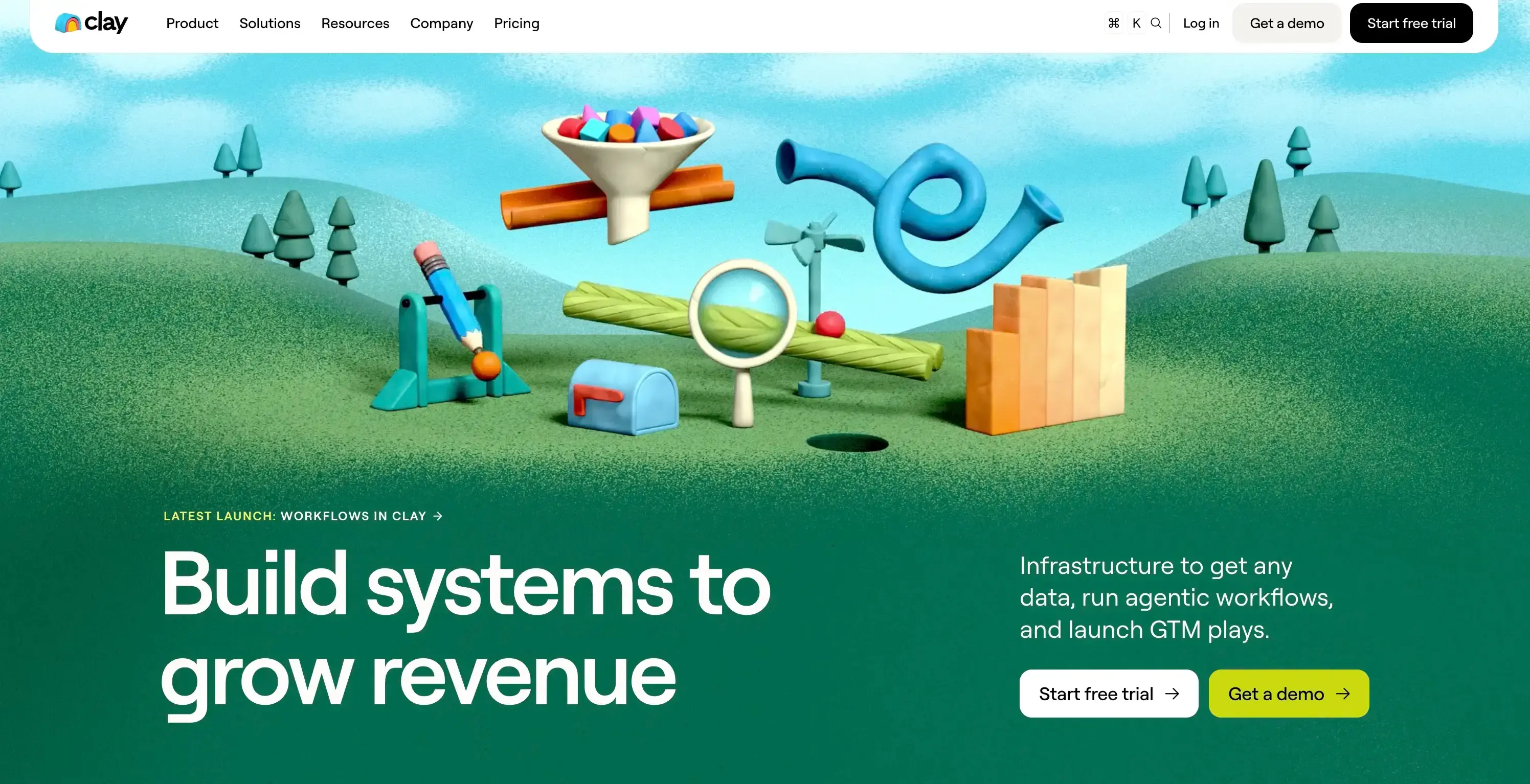
5. Clay
Source: clay.com
Overview: an enrichment and list-building tool that pulls and combines data from multiple sources before outreach even starts.
Pros
- Highly flexible enrichment workflows that can combine several data providers in one build.
- Useful for building tightly targeted account lists rather than broad, generic ones.
Cons
- Has a real learning curve compared to plug-and-play prospecting tools.
- Value depends on knowing exactly what enrichment logic to build in the first place.
Top 5 software tools for inbound sales teams
These five cover the core inbound motion: capturing interest, routing it fast, and scoring it correctly once it lands in the CRM.
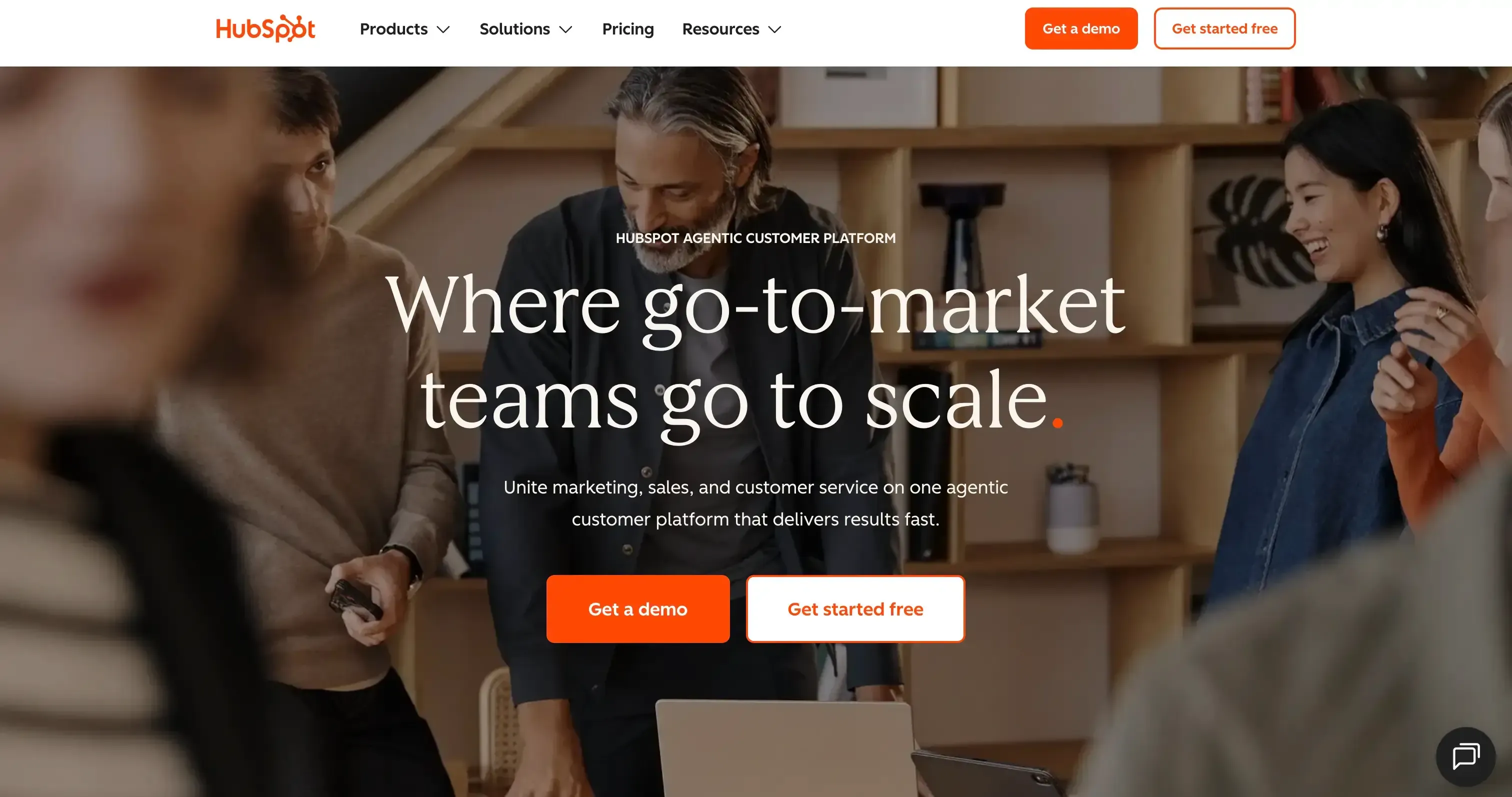
1. HubSpot Marketing Hub
Source:hubspot.com
Overview: an inbound marketing platform tightly connected to HubSpot's own CRM, covering content, forms, and lead nurturing in one system.
Pros
- Marketing and CRM data live in one place, so handoffs are cleaner.
- Strong content and landing page tooling for building inbound channels.
- Large ecosystem of integrations for teams already using other HubSpot products.
Cons
- Costs climb quickly once a team needs more advanced marketing features.
- Can be more platform than a small sales team needs on its own.
2. Leadfeeder
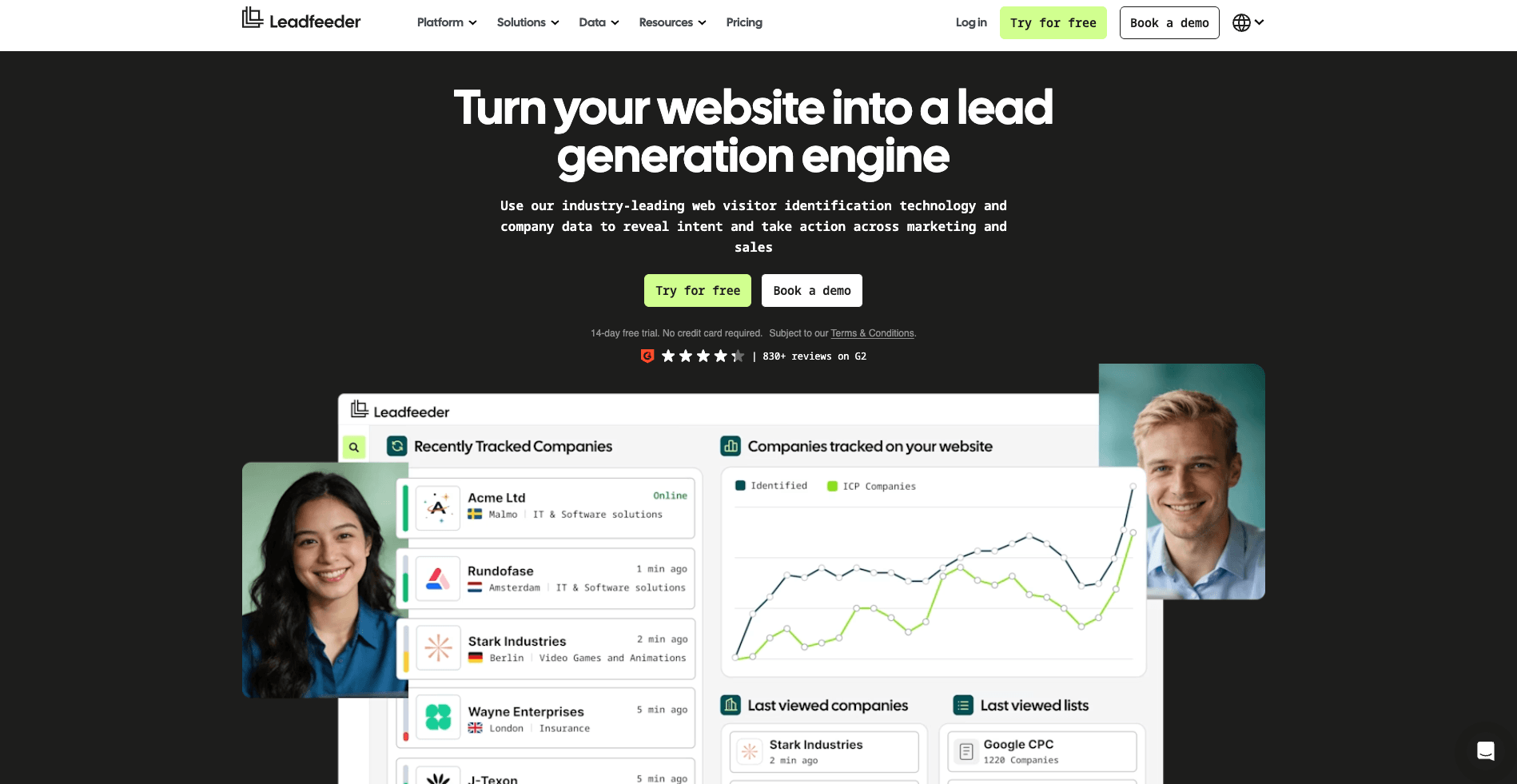
Source: leadfeeder.com
Overview: a tool that identifies anonymous website visitors and turns them into named, contactable accounts based on real behavior.
Pros
- Surfaces buying signals from visitors who never fill out a form.
- Sends identified accounts straight to the CRM and engagement tools automatically.
Cons
- Only as useful as the traffic a site already gets.
- Identifies accounts rather than individual contacts, so some enrichment is still needed.
3. Default
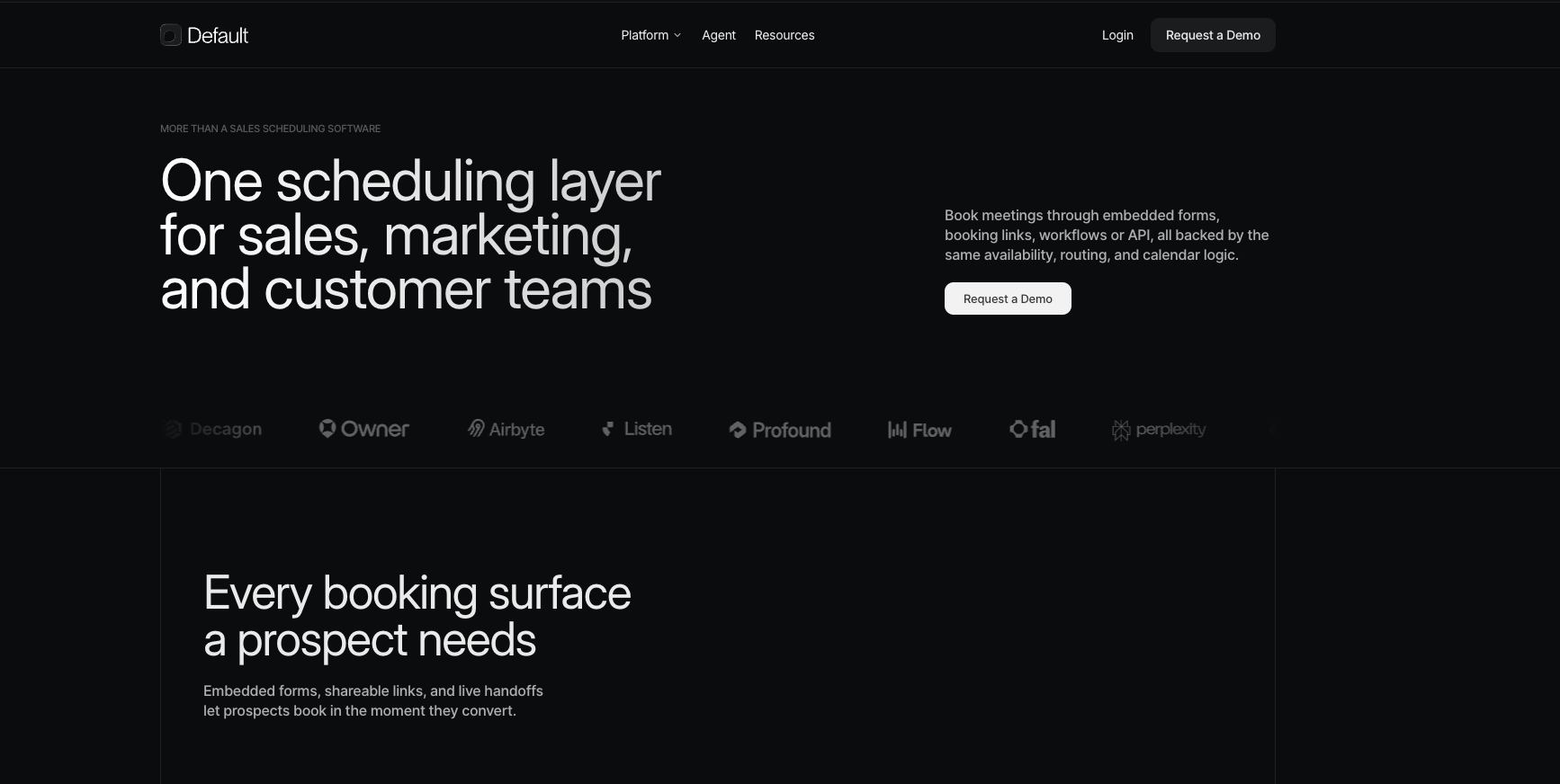
Source: default.com
Overview: a routing and scheduling tool that acts the moment a form is filled out, aiming to close the speed-to-lead gap.
Pros
- Cuts the delay between a form fill and the first outreach attempt.
- Fixes common CRM hygiene issues like duplicate leads and bad routing rules.
Cons
- Solves a specific problem, routing and scheduling, rather than the full inbound stack.
- Needs clean form and CRM data upstream to route leads well.
4. SparrowCRM
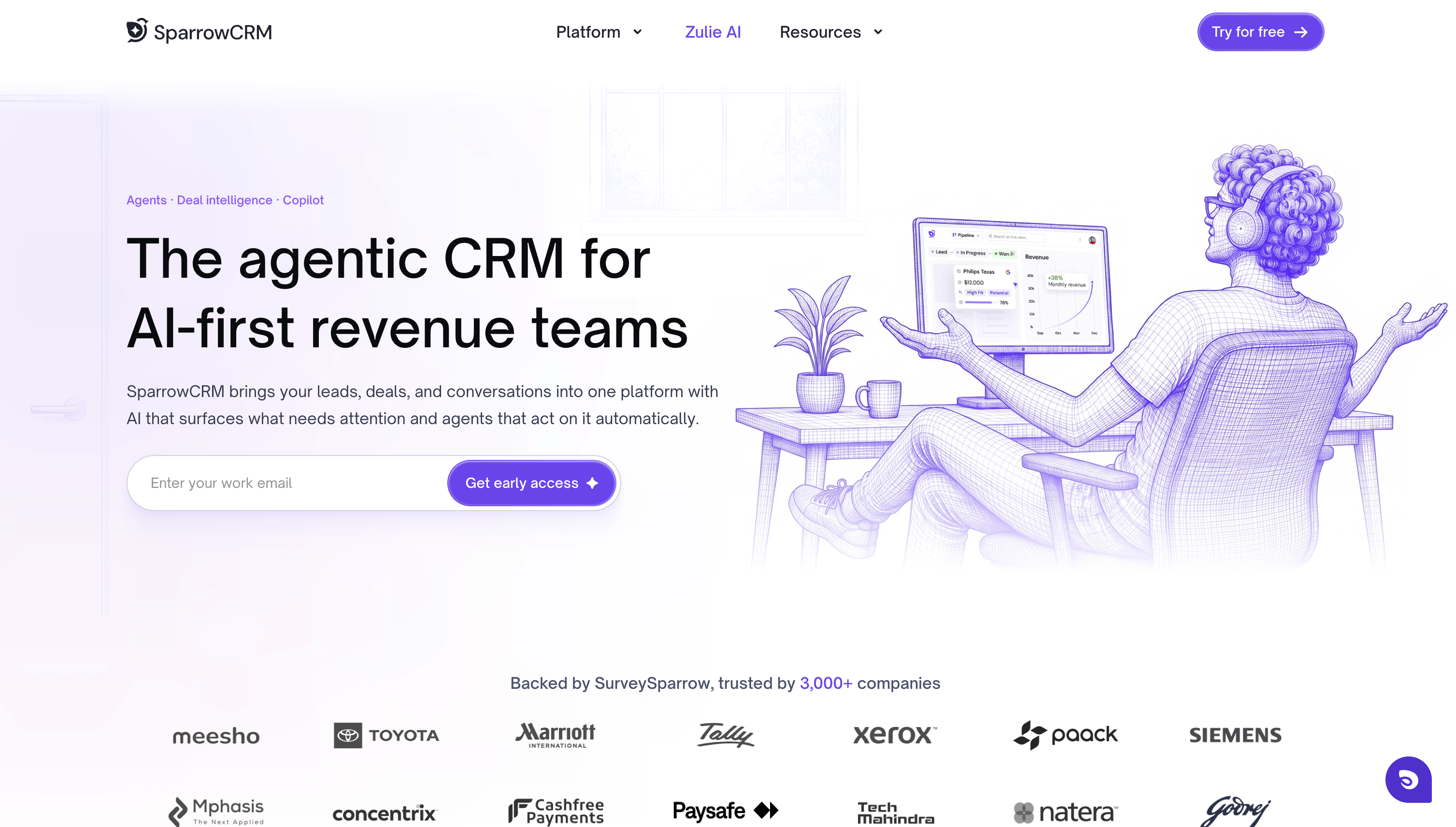
Overview: a CRM that tags each lead's source automatically at capture and adjusts scoring and next-recommended-action based on whether the lead arrived inbound or was sourced outbound.
Pros
- Removes manual triage for reps deciding how to follow up on a new lead.
- Keeps inbound and outbound follow-up logic separate without adding extra tooling.
- Keeps lead-source data clean for future decisions about shifting the inbound-outbound ratio.
Get an AI CRM Free for Your First 3 Users
5. Zoom
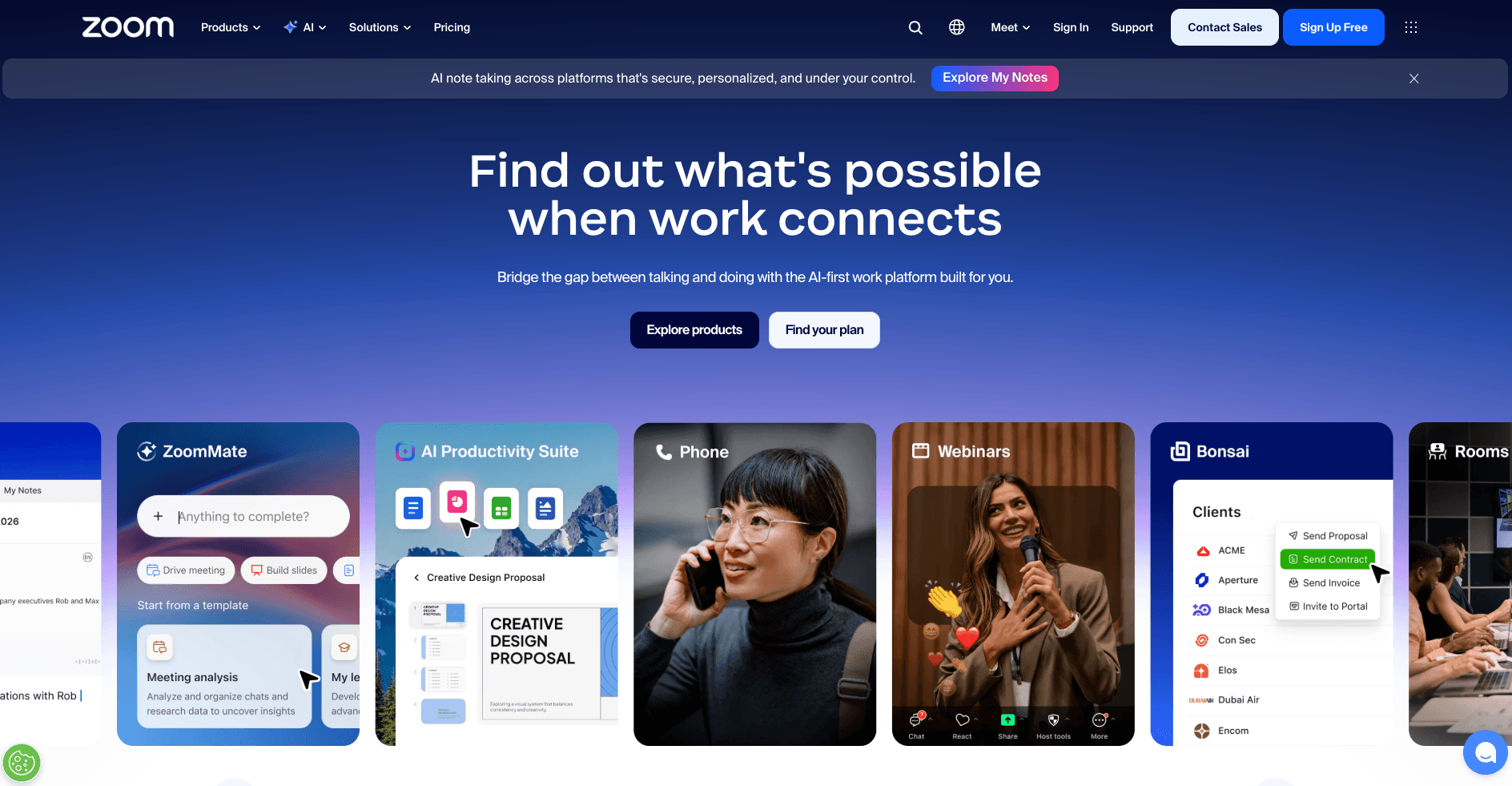
Source: zoom.com
Overview: a way to host live or on-demand webinar sessions that let prospects self-qualify simply by attending and engaging.
Pros
- Familiar interface for most B2B buyers, which lowers friction to attend.
- Integrates with common CRM and marketing tools for follow-up.
Cons
- Attendance alone does not equal intent, so follow-up still needs to be filtered.
- Production quality needs some investment for a session to stand out.
Final thoughts
Most growing B2B teams do not have to choose permanently between inbound vs outbound sales. The right ratio moves as the business matures, typically starting outbound-heavy to create early demand, then shifting toward a more balanced or inbound-heavy mix once brand visibility and content start to compound. Tracking lead source cleanly in the CRM from day one turns that shift into a data decision instead of a guess.