OUTREACH
51 cold email subject lines that actually get responses in 2026

By Ganesh Ravi Shankar
Last updated on Jul 31, 2026
Explore this blog to get 51 categorized cold email subject lines, the rules behind why they work, and a framework for writing your own.
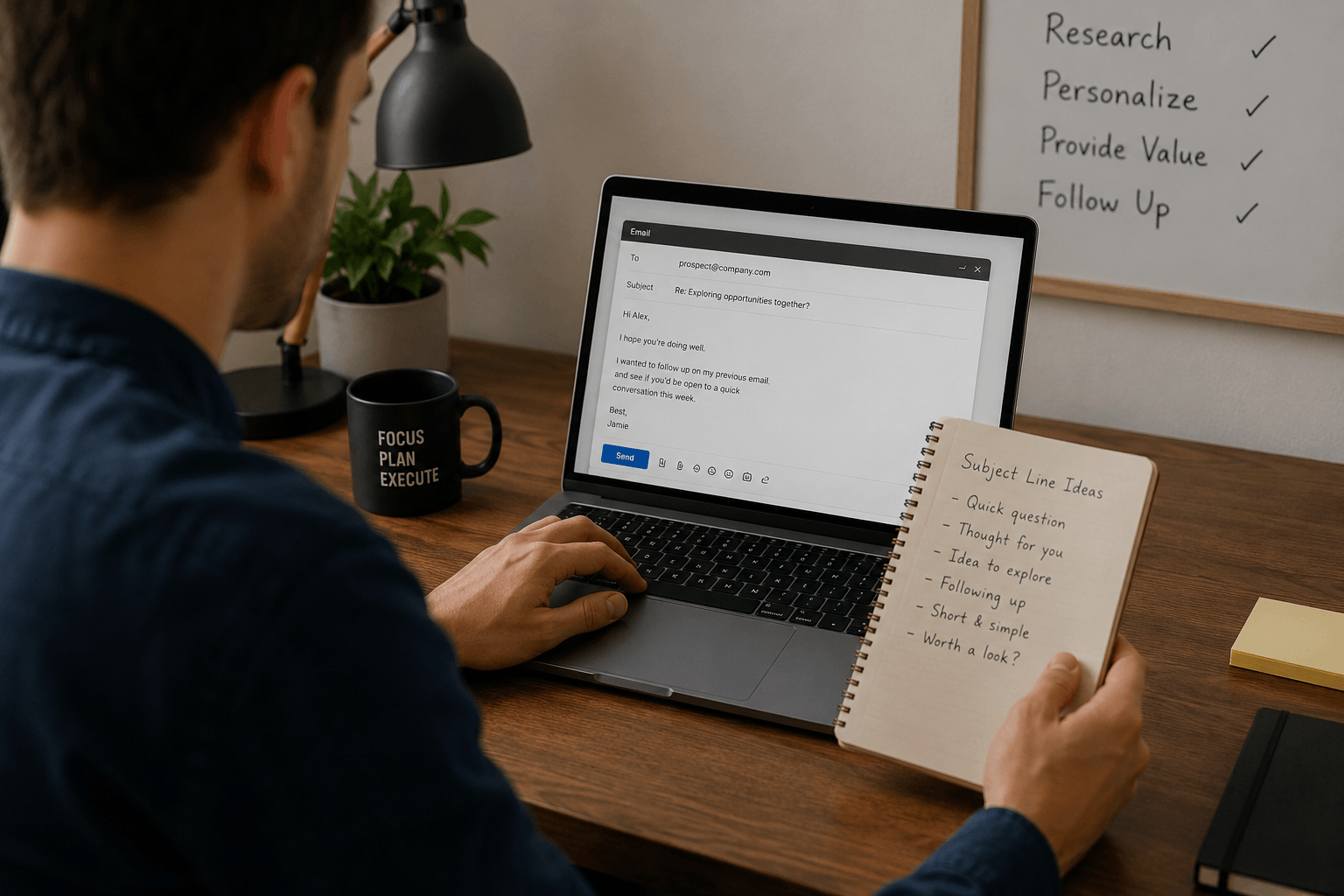
Whether your cold email is opened or ignored depends on the subject line. The most effective subject lines are brief, relevant, and unique enough to stand out in a crowded inbox. This guide contains 51 tested examples of cold email subject lines as well as useful advice on how to craft subject lines that increase open rates and replies.
What is a cold email subject line?
A cold email subject line is the short line of text where prospects decide to read the email. For B2B sales teams, it is the biggest factor for the success of the cold email campaign.
Personalisation changes the result. A generic subject line is less likely to be opened than one that mentions the recipient's position, business, or a recent occasion.
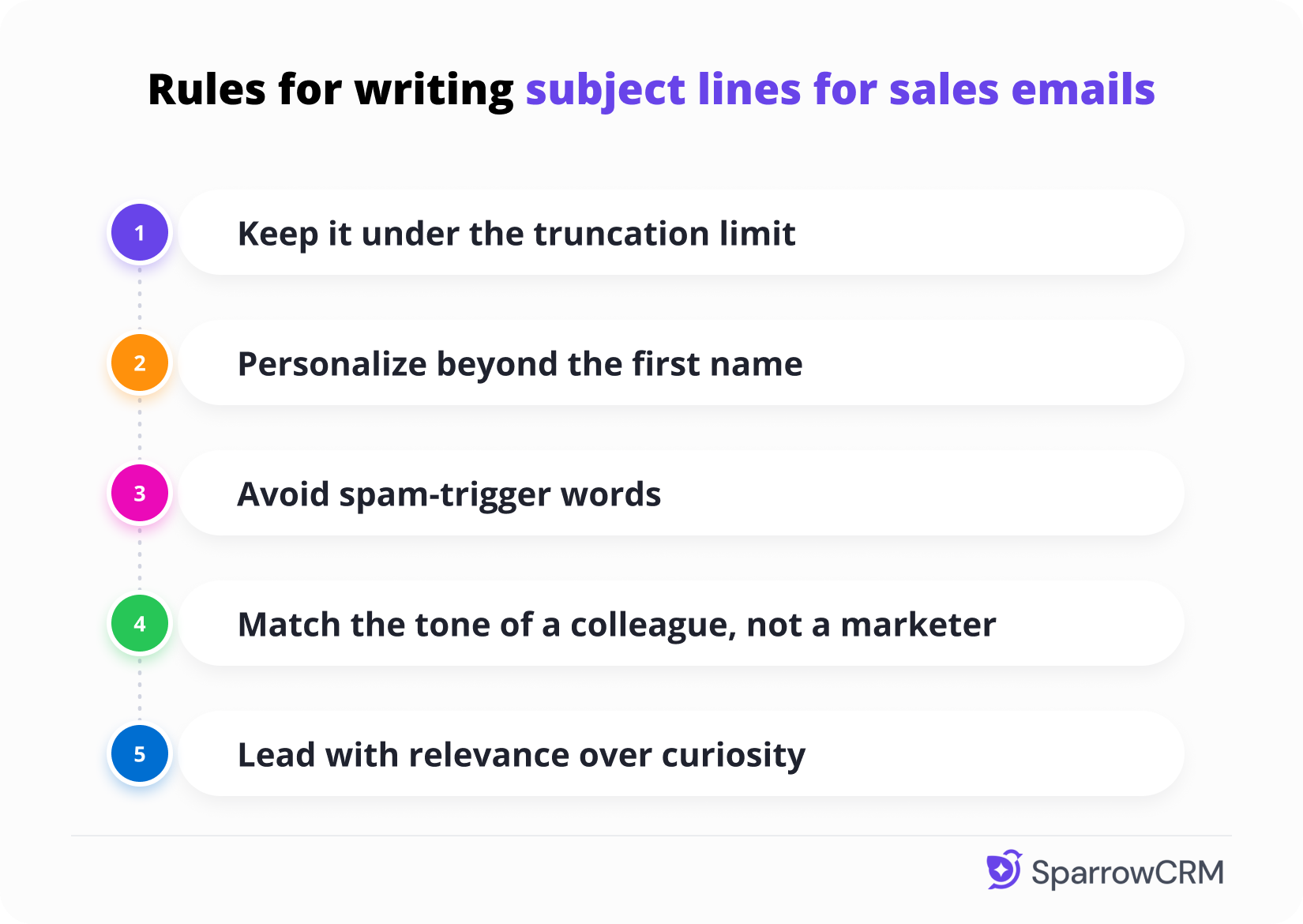
Rules for writing subject lines for sales emails
Writing subject lines for sales emails that earn replies comes down to five rules. These apply to a two-person startup and an enterprise sales team alike.
1. Keep it under the truncation limit
Lead with the most important detail, whether it's the prospect's company, a recent event, or a specific number. Keep that key information within the first 33 characters so it's visible on most mobile inboxes.
If the main point appears too late, many recipients won't see it. Before sending, preview your subject line on a phone, since most B2B professionals check their emails on mobile devices first.
2. Personalize beyond the first name
A first name alone is not personalization anymore. Most spam includes a first name too. Reference something a recipient can only verify through real research. That could be their job title, a recent hire, a product launch, or a shared connection; this level of personalization is important for a higher open rate.
3. Avoid spam-trigger words
Avoid using spam-trigger words such as "free," "guarantee," "act now," or "100% risk-free" in your subject lines, as they can reduce deliverability regardless of how strong your email is. Writing in ALL CAPS or using excessive punctuation can also increase the chances of your email being flagged.
Instead, use clear, specific language that sounds like a genuine one-to-one message. While a single trigger word may not cause problems, combining several in the same subject line can significantly increase the likelihood of your email landing in the spam folder.
4. Match the tone of a colleague, not a marketer
Subject lines that read like a genuine internal email tend to perform better than ones that sound like marketing copy. Keep them simple, conversational, and free of emojis or unnecessary formatting.
The goal is to blend naturally into the recipient's inbox rather than immediately signaling a sales pitch. A good rule of thumb is to ask yourself: Would this subject line look normal if it came from a coworker? If the answer is no, it's worth rewriting.
5. Lead with relevance over curiosity
Curiosity-driven lines work in consumer marketing, but in B2b this is a vague outreach method. In B2B cold email outreach, relevance plays an important role for higher open rates and campaign success.
It requires visibility at each stage of a sequence to track which category actually generates responses. This applies to all sends, not just the initial one. Sequence analytics in SparrowCRM break down reply and open rates by variant.
📊 Did You Know?
Around 47% of email recipients decide whether to open an email based on the subject line alone, making it one of the biggest factors influencing open rates.
51 cold email subject lines
Not every cold email subject line works in every situation. Some are designed to grab attention on the first email, while others are more effective later in a follow-up sequence. That's why the 51 examples below are grouped into eight categories based on the trigger they use.
These categories include personalization, curiosity, pain points, value, social proof, referrals, trigger events, and urgency. Replace the placeholders with details relevant to your prospect before sending. Using these subject lines as generic templates without personalization will reduce their impact.
Category | Best used on | Examples |
Personalization-based | First touch | 7 |
Curiosity and question-based | First or second touch | 7 |
Pain-point focused | Second or third touch | 7 |
Value and benefit-driven | Second or third touch | 7 |
Social proof and results-based | Third or fourth touch | 6 |
Referral and mutual-connection | First touch, when available | 6 |
Trigger-event and timing-based | First touch, time-sensitive | 6 |
Urgency and break-up | Final touch only | 5 |
Personalization-based
These reference a detail specific to the recipient or their company, such as a role, a hire, or a launch. They work best as the opening touch, before any pitch has been made.
- Congrats on the new funding, {FirstName}
- Noticed you're expanding the sales team
- Question about {Company}'s outbound process
- Following up on your recent product launch
- Idea for improving {Company}'s pipeline
- Saw your hiring plans for Account Executives
- Quick thought after your LinkedIn post
Curiosity and question-based
These pose a direct question relevant to the recipient's role. They are not a vague teaser designed to bait a click. The question should be answerable in one sentence in the email body.
- Are you still handling outbound the old way?
- Quick question about your sales pipeline
- Is lead follow-up eating your team's week?
- What's slowing down your sales cycle right now?
- Curious how {Company} tracks deal health
- Worth two minutes of your time?
- One question about your CRM setup
Claim Your Free CRM for 3 Users
Pain-point focused
These name a problem the recipient is likely already facing, based on their role or industry. They work well on the second or third touch, once the recipient has seen the sender's name once already.
- Still chasing leads across three different tools?
- Losing deals to slow follow-up?
- Manual data entry costing your team hours?
- Struggling to spot which deals are actually moving?
- Reps missing follow-ups without knowing it?
- Pipeline visibility problem, solved
- When deals go quiet, do you know why?
Value and benefit-driven
These lead with the outcome instead of the problem. They suit a recipient who already recognizes the pain point and wants to see the fix.
- Cut your sales admin time in half
- A faster way to qualify leads
- Spend less time updating your CRM
- Give your reps their week back
- Score leads automatically, not manually
- See deal health before it's too late
- One dashboard for your whole pipeline
Social proof and results-based
These reference a result achieved by a similar company. Pick one the recipient would recognize by name or industry position.
- How {SimilarCompany} shortened its sales cycle
- What {SimilarCompany}'s RevOps team changed this year
- 30% faster follow-up - here's how
- The change that cut {SimilarCompany}'s admin time
- Why {SimilarCompany} switched CRMs
- Results {SimilarCompany} saw in 90 days
Referral and mutual-connection
These work only when the connection named is real and relevant to both sides. A fake or exaggerated connection is easy to spot. It damages trust right away.
- {MutualContact} suggested I reach out
- We both know {MutualContact}
- {MutualContact} mentioned {Company}'s sales team
- Connecting through {MutualContact}
- {MutualContact} thought we should talk
- A mutual connection, {MutualContact}
💡 Pro Tip
Match the buyer's journey
Not every prospect is at the same stage. A company researching solutions may respond to "Ideas for improving lead response time," while an existing lead might be more likely to open "Following up on yesterday's conversation." Align your subject line with where the recipient is in their buying journey.
Trigger-event and timing-based
These tie the outreach to something that just happened at the recipient's company. This is why the research step above matters most for this category.
- Saw the news about {Company}'s funding round
- Congrats on the new {Role} hire
- Noticed {Company} is expanding into {Region}
- Following up after {Event}
- Saw {Company} on this quarter's industry list
- Timing this around {Company}'s Q{X} planning
Urgency and break-up (final follow-up)
These work as the last email in a sequence, not the first. They rely on the recipient already having seen prior touches.
- Should I stop reaching out?
- Closing the loop on this
- Last note from me on this
- Still worth a conversation?
- Wrapping up - one last thought
Among these categories, trigger-event and referral-based subject lines tend to produce the highest reply rates. They reference something the recipient cannot dismiss as mass outreach. The best cold email subject lines are specific enough that a recipient cannot tell they were sent to more than one person.
How to A/B test your cold email subject lines
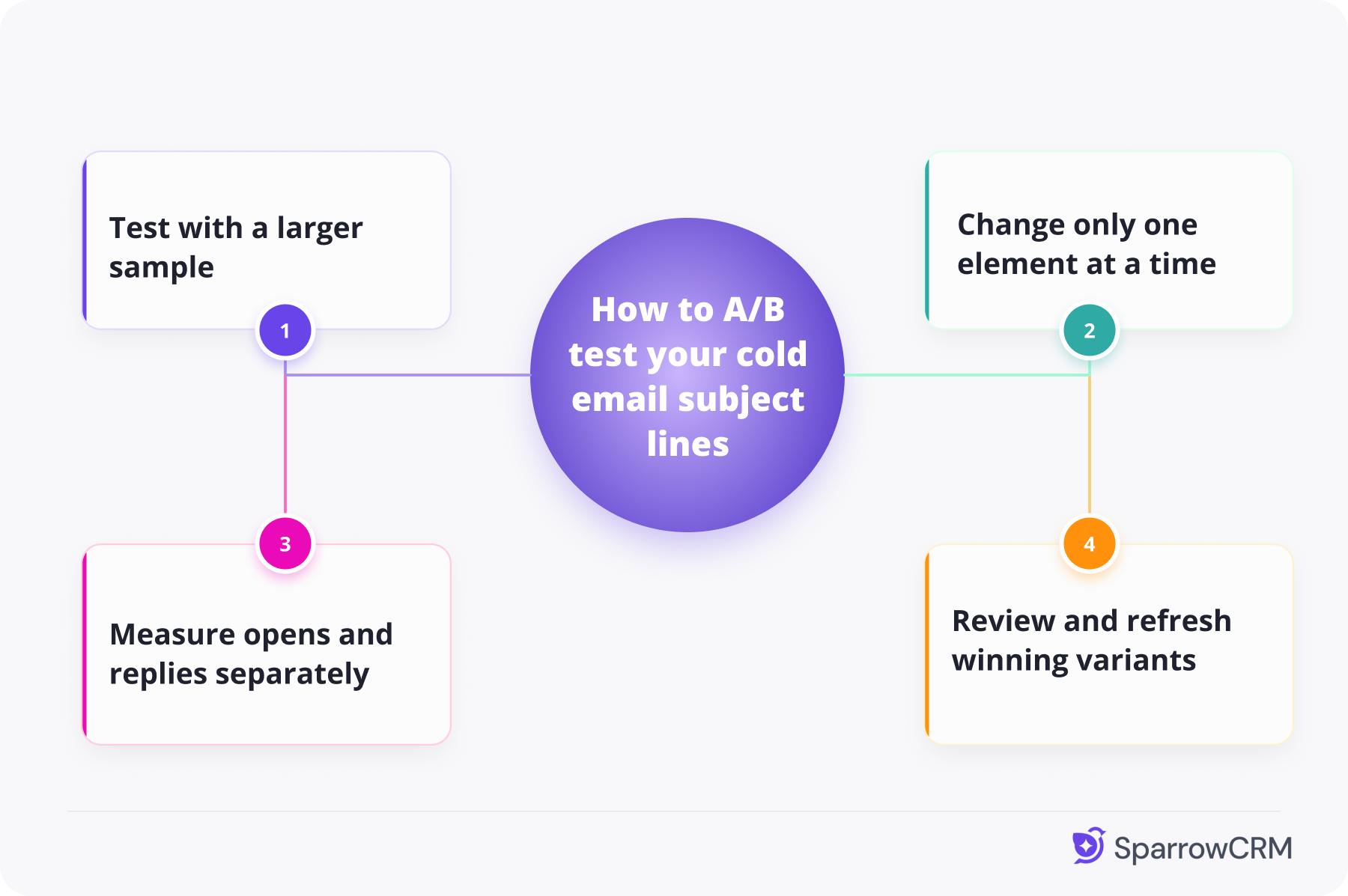
A/B testing helps you identify which subject lines actually drive better results, but only when it's done correctly. To get reliable insights, you need enough data, controlled testing, and consistent review.
1. Test with a larger sample
Avoid concluding from small campaigns. Sending two subject line variations to just a few dozen prospects won't produce meaningful results. Aim for 100–200 recipients per variation so the performance difference is statistically more reliable.
2. Change only one element at a time
Keep every part of your test the same except for a single variable. For example, test personalization vs. generic wording, short vs. long subject lines, or question-based vs. benefit-driven subject lines. Changing multiple elements at once makes it difficult to determine what influenced the results.
3. Measure opens and replies separately
Open rates show whether a subject line captures attention, while reply rates reveal whether the email delivered on its promise. A subject line with a high open rate but few replies may create curiosity without offering enough value in the email itself. Track both metrics independently to understand what's actually working.
4. Review and refresh winning variants
Subject lines don't perform the same forever. Review your results regularly; monthly is a good starting point to identify declining performance. Replace weaker variations with new ideas and continue testing to keep your outreach effective over time.
Mini Case Study
Shane Snow's 1,000 Cold Email Experiment
Shane Snow tested 1,000 cold emails sent to executives from Fortune 500 and Inc. 500 companies. His experiment found that short subject lines like "Quick question" achieved higher open rates than many longer alternatives.
However, the biggest insight wasn't the subject line; it was personalization. Emails that answered the recipient's implicit question of "Why me?" were far more likely to earn replies than generic outreach. The study concluded that while subject lines help get the open, relevant and personalized email content is what drives responses.
Common mistakes that hurt cold email open rates
Many cold email campaigns fail for the same reasons, regardless of the industry or audience. Even a well-written email can be ignored if the subject line follows poor practices. Here are some of the most common mistakes to avoid:
- Repeating the same subject line style throughout your sequence. Using a similar pattern in every follow-up makes your outreach feel automated and easier to ignore.
- Overpromising with personalization. If your subject line references something specific but the email doesn't deliver on that promise, recipients quickly lose trust.
- Placing the key message too late. Mobile inboxes often display only the first 30–40 characters, so burying the main hook reduces the chances of it being seen.
- Using multiple spam-trigger words. Combining terms like "free," "guaranteed," or "limited time" can increase spam scores and hurt deliverability.
- Not previewing the subject line on mobile. A subject line that looks fine on desktop may be cut off on a smartphone, hiding the most important information.
- Sending emails to outdated or inaccurate contact lists. Even the strongest subject line can't overcome incorrect job titles, inactive email addresses, or poor-quality data.
Final thoughts
Lines that get replies share five traits. They fit within the truncation limit. They personalize beyond a first name. They avoid spam-trigger language. They match a colleague's tone. They lead with relevance.
The 51 examples above cover eight categories built around this data. Swapped placeholders make each line different across campaigns instead of a repeated template. The category that performs best will vary by list and industry. That is why testing at volume and tracking reply rate specifically matters more than picking one universal winner.